
Top Signs You Need Air Duct Cleaning Service – Don’t Ignore These
Dust on a supply register can mean dirty ducts, or it can mean a clogged filter, and most homeowners can’t tell the difference. The more reliable signals are performance and air-quality patterns: a spike in your Con Edison bill during a week when outdoor temperatures held steady, rooms that never quite cool, a musty smell that comes and goes with the system. Those point to duct restriction forcing your air handler to work harder than it should. If you’d rather not spend a weekend guessing, call (855) 337-2008 and we’ll sort it out.
Start With Your Registers, Not Your Gut
Before you call anyone, do a two-minute register inspection. It’s the single most useful diagnostic a homeowner can run, and it separates settled surface dust from active debris moving through the duct.
Here’s how it goes. Turn the system off. Take a flashlight and a white cloth or paper towel. Pop the register grille off one supply vent, wipe the inside lip of the duct with the cloth, and shine the light down the run as far as you can see.
- Light gray film on the cloth: normal settled dust. Clean the grille and move on.
- Cloth comes back dark and thick: particulate buildup inside the duct, not just at the opening. Worth a professional look.
- Visible debris clinging to the duct walls: active contamination. This is the one that moves to the top of the list.
- Fuzzy or speckled growth on the metal: suspected biological growth, which needs sanitizing on top of mechanical cleaning.
- Loose debris that shifts when you tap the duct: the run hasn’t been cleaned in a long time, or something upstream is shedding material.
Do this at two or three registers, ideally one on each floor or at the far end of the longest run. The pattern across registers tells you more than any single vent. In Greenwich Village, where many buildings run long shared chases, the far registers are usually the honest ones.
Performance Signs That Point to Duct Restriction
A 15% jump in your Con Edison bill during a week when outdoor temperatures held stable is a more precise signal than anything you’ll see at the register. Stable weather means stable runtime, so a bill creep with no weather explanation usually means the air handler is running longer to hit the same setpoint. Duct restriction is one of the causes. It isn’t the only one, and that distinction matters.
Watch for this cluster:
- Rooms that never reach temperature. The far bedroom stays two or three degrees off while the near rooms overshoot. That’s a balance or restriction problem, not a dirty-filter problem.
- Weak airflow that’s weak everywhere. If one register is soft, suspect that branch. If all of them are soft, suspect the filter, the blower, or the main trunk.
- Longer runtimes with the same thermostat setting. The system is working harder to move the same air.
- Short cycling after a filter change. You changed the filter and nothing improved, which points away from filter neglect.
Here’s the honest part: dirty ducts can cause these symptoms, but so can a failing blower, a crushed flex run, or a damper stuck closed. We’ve seen plenty of Greenwich Village apartments where the real problem was a disconnected duct in a mechanical closet, not contamination. Cleaning wouldn’t have fixed it. Repair and sealing would. That’s why we run the full scope, from air duct cleaning through repair and sealing, rather than selling one service and leaving you to find a second contractor.
The Air Quality Pattern That Means Something Else Entirely
Particulate buildup and biological contamination leave different fingerprints. Getting this wrong wastes money in both directions.
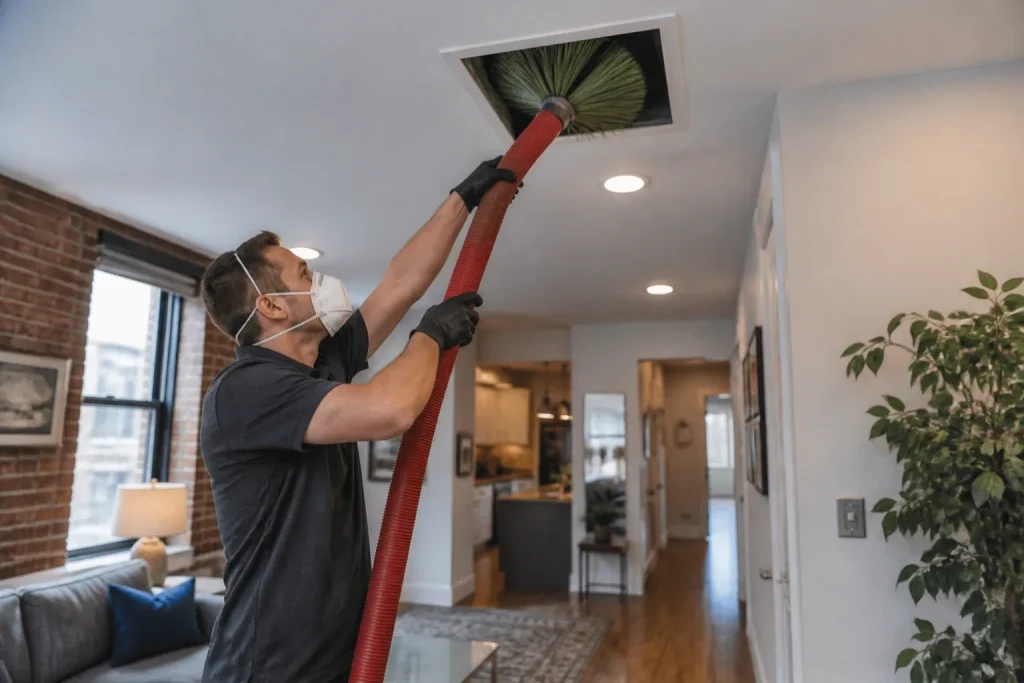
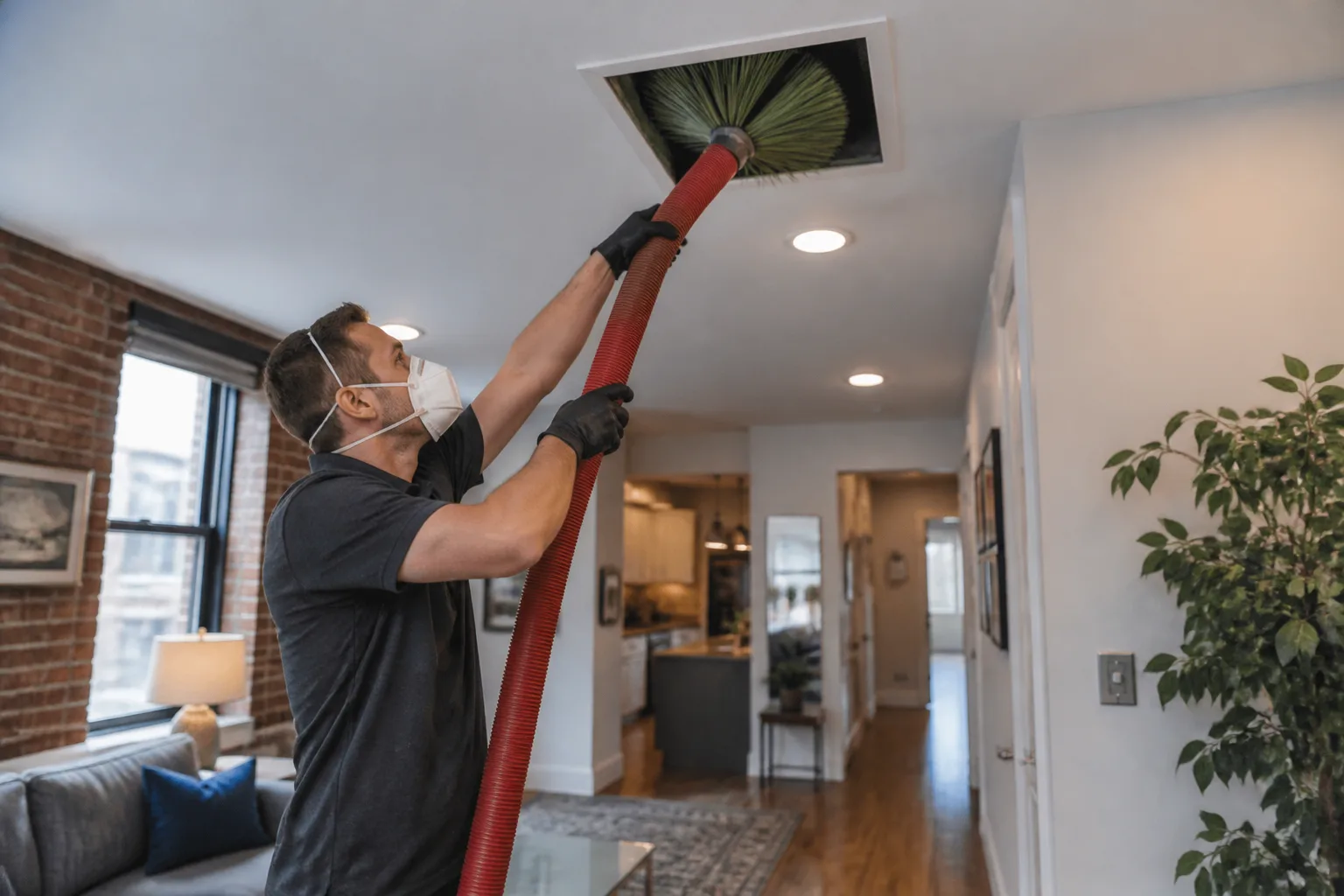
Particulate signals: dust settling faster than usual on horizontal surfaces, dark streaks near registers, a gritty feel to the air, visible debris in the duct. This is mechanical cleaning territory. Agitation and extraction with a rotary brush system handles it.
Biological signals: a musty or earthy smell that appears when the system starts and fades when it stops. Worsening allergy-type symptoms indoors that ease when you’re away from home. Discoloration on duct surfaces or around the air handler cabinet. Condensation or past moisture near the coil. Those patterns suggest mold or bacterial growth, and mechanical cleaning alone won’t resolve it. You need sanitizing after the debris is removed, which is why we treat air quality and sanitizing as a separate service rather than an upsell.
One more pattern worth knowing: symptoms that track with a specific room rather than the whole home usually mean a local moisture source, not a whole-system problem. In Greenwich Village, ground-floor units that have seen water intrusion are the classic case. So are units adjacent to a bathroom renovation.
Greenwich Village Triggers Most Checklists Miss
Some conditions are specific to how buildings here are built and how neighbors live.
Renovation dust from a neighboring unit. Shared duct chases and party-wall penetrations mean a gut renovation two floors up can push fine drywall dust into your supply runs. If your registers started dusting right after scaffolding went up next door, that’s not a coincidence. Construction dust is abrasive and fine enough to coat a coil.
Rodent activity in basement mechanical rooms. Droppings, nesting material, and fur travel through return ducts. If you’ve had a pest issue in the mechanical space, the ductwork downstream is worth inspecting. This is also where containment matters: HVAC cleaning with proper negative-air equipment keeps that material from redistributing into living spaces while it’s being removed.
Post-flood conditions in ground-floor units. Water intrusion that reached the ductwork or the air handler leaves moisture behind. A musty smell that started after a flood event and never fully went away is a signal, not a lingering annoyance.
The dryer vent most people never think about. Lint accumulation in a dryer vent is a documented fire hazard, and it’s a service most HVAC-only cleaners decline. If your dryer takes two cycles to dry a load, that’s the sign, and it’s separate from anything happening in your air ducts.
The Sign Everyone Lists That’s Actually a Weak Indicator
You’ll see “visible dust on your registers” at the top of nearly every duct-cleaning checklist on the internet. It’s a poor indicator, and here’s why.
Register dust is the accumulation of ordinary household particles settling on a grille over weeks. It says almost nothing about what’s inside the duct run behind it. A home with a clean duct system and a dusty grille looks identical to a home with a contaminated system and a dusty grille. Filter neglect, candle soot, cooking aerosol, and street dust all land on that same grille.
What makes it a weak indicator is that it’s the easiest thing to photograph and the easiest thing to sell against. We’d rather you check the cloth test and your energy pattern than point at a grille. If a company leads the conversation with a dusty register and a coupon price, ask what equipment they’re bringing and whether they can show you before-and-after photos of your own ducts when they’re done. That question sorts out a lot.
When to Call a Pro
Call when you find dark, thick debris on the cloth test, when the musty smell tracks with system runtime, when your bill climbs through stable weather, or when a renovation or water event has touched your ductwork. Those are the cases where a real inspection saves you money.
The equipment matters more than the price. We use Rotobrush rotary-brush systems for agitation and extraction, Nikro equipment on every job, and Abatement Technologies negative-air units so containment is real rather than implied. Your air handler stays out of the debris path while we work. Our technicians have up to 9 years of experience, and we can service Honeywell and Aprilaire systems already installed in your home rather than working around them.
Related services in Greenwich Village: Air Duct Cleaning Greenwich Village for the full service overview, and dryer vent cleaning if your laundry is the actual concern.
The Bottom Line
Register dust is the weakest signal on the list. The ones worth acting on are the cloth test showing dark, thick debris, a bill climb during stable weather, a musty smell timed to system runtime, and any event – renovation, flood, pest activity – that put material into your ductwork. If the pattern points to biological growth, you need sanitizing alongside cleaning, not instead of it.
If you’re in Greenwich Village and need help, Air Duct Cleaning Greenwich Village offers free estimates – call (855) 337-2008. We answer 24/7. Fast dispatch from 7am to 7pm, Sunday through Friday.
Frequently Asked Questions
Ask for before-and-after photos of your own ducts, taken at the same access points during the job. Any reputable company will provide them without being asked twice. We document each run so you can see the difference rather than take our word for it. Call (855) 337-2008 to set up an inspection.
There’s no fixed calendar answer. A well-maintained home with a clean filter and no events usually needs it far less often than the industry suggests. A Greenwich Village unit that’s been through a renovation, a flood, or a pest issue may need it once and then not again for a long stretch. Base the decision on the signals above, not on a schedule someone quotes you over the phone. Call (855) 337-2008 if you want an honest read on your situation.
Cheap quotes usually reflect less equipment, less time, and no containment. A shop-vac and a hose will pull some loose debris out of a register, but it won’t agitate material off the duct walls or keep it out of your living space during the job. Ask what machines will be on site and whether negative-air containment is part of the setup. Call (855) 337-2008 for a free estimate with the equipment spelled out.
They can contribute to it by restricting airflow and forcing the air handler to run longer. They’re not the only cause, and a stable-weather bill spike should send you looking at the filter, the blower, and the duct runs together rather than assuming contamination. Our technicians have up to 9 years of experience distinguishing those cases. Call (855) 337-2008 and we’ll walk through what’s likely in your building.
We use Rotobrush rotary-brush systems, Nikro HVAC cleaning equipment, and Abatement Technologies negative-air filtration units. It matters because agitation and extraction reach material a vacuum alone leaves behind, and containment keeps debris from redistributing into the rooms you live in. It’s the difference between a surface pass and a real cleaning. Call (855) 337-2008 with any equipment questions before you book.
Written by the team at Air Duct Cleaning Greenwich Village.
Need Air Duct Cleaning Help?
Call Air Duct Cleaning Greenwich Village - the local pro we connect you with is licensed and insured, with free written estimates in Greenwich Village.
(855) 337-2008