
Last updated November 22, 2026
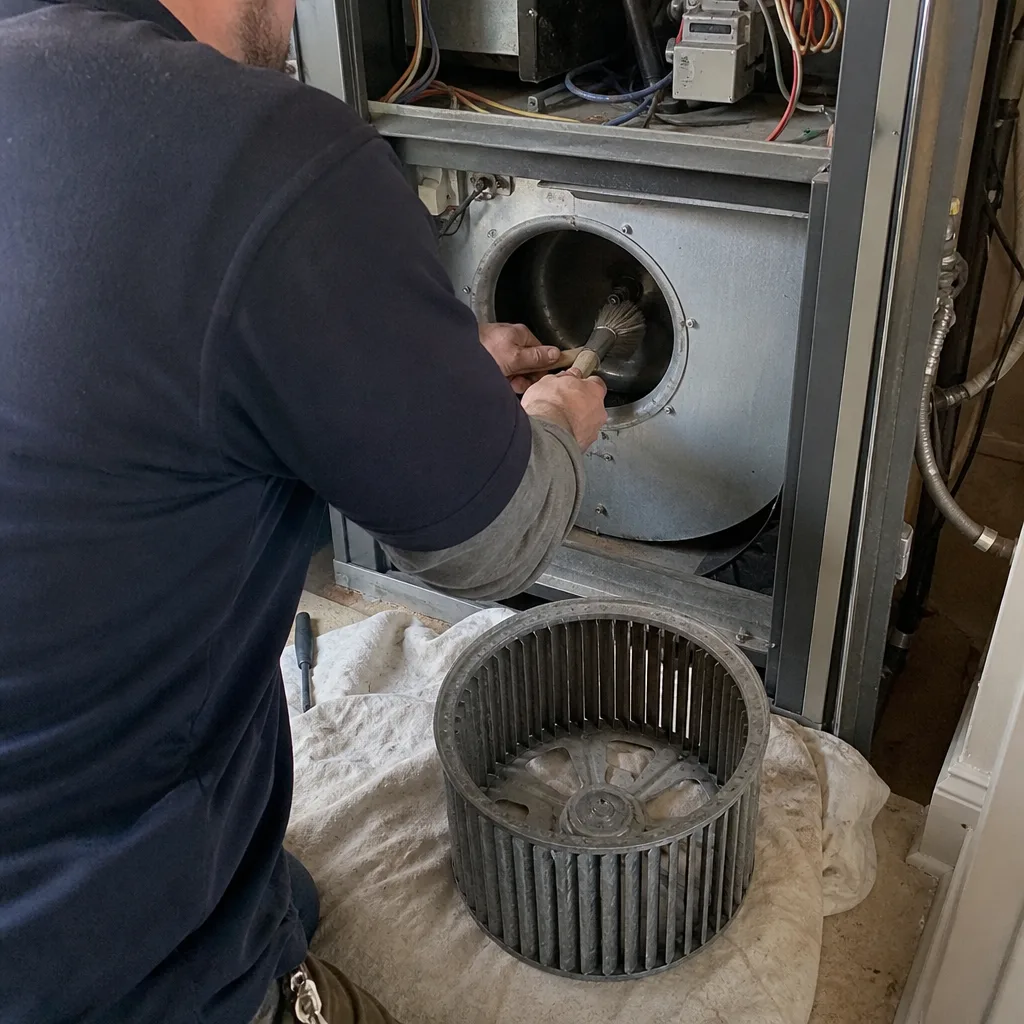
 Whole-home duct cleaning
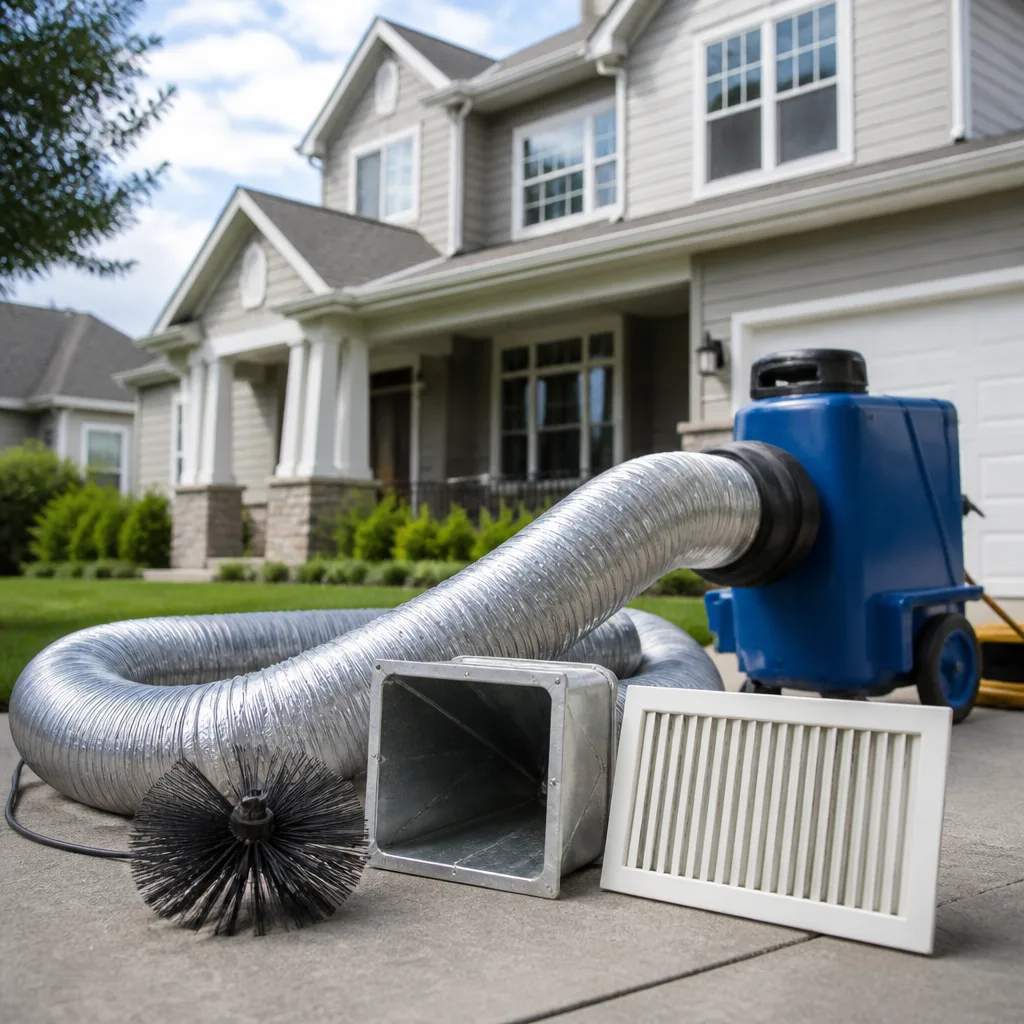
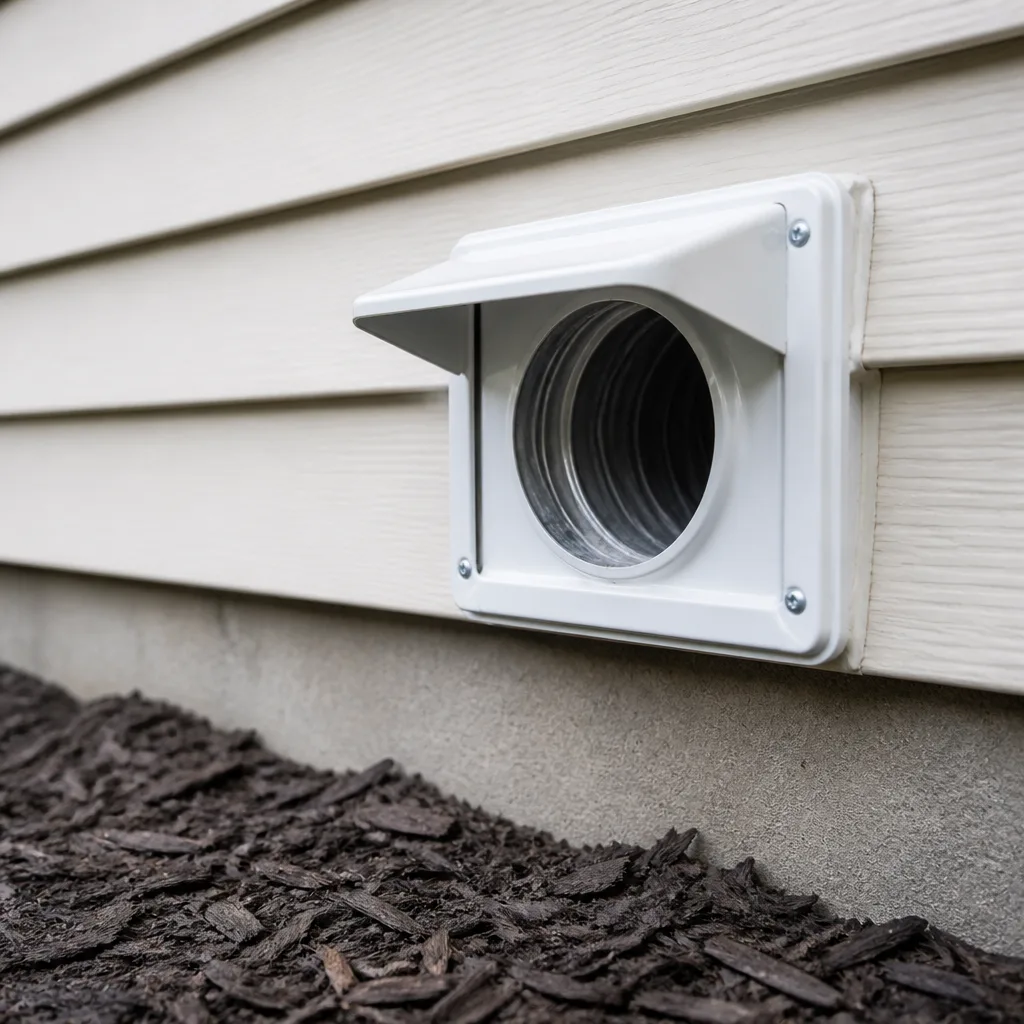 Dryer vent cleaning
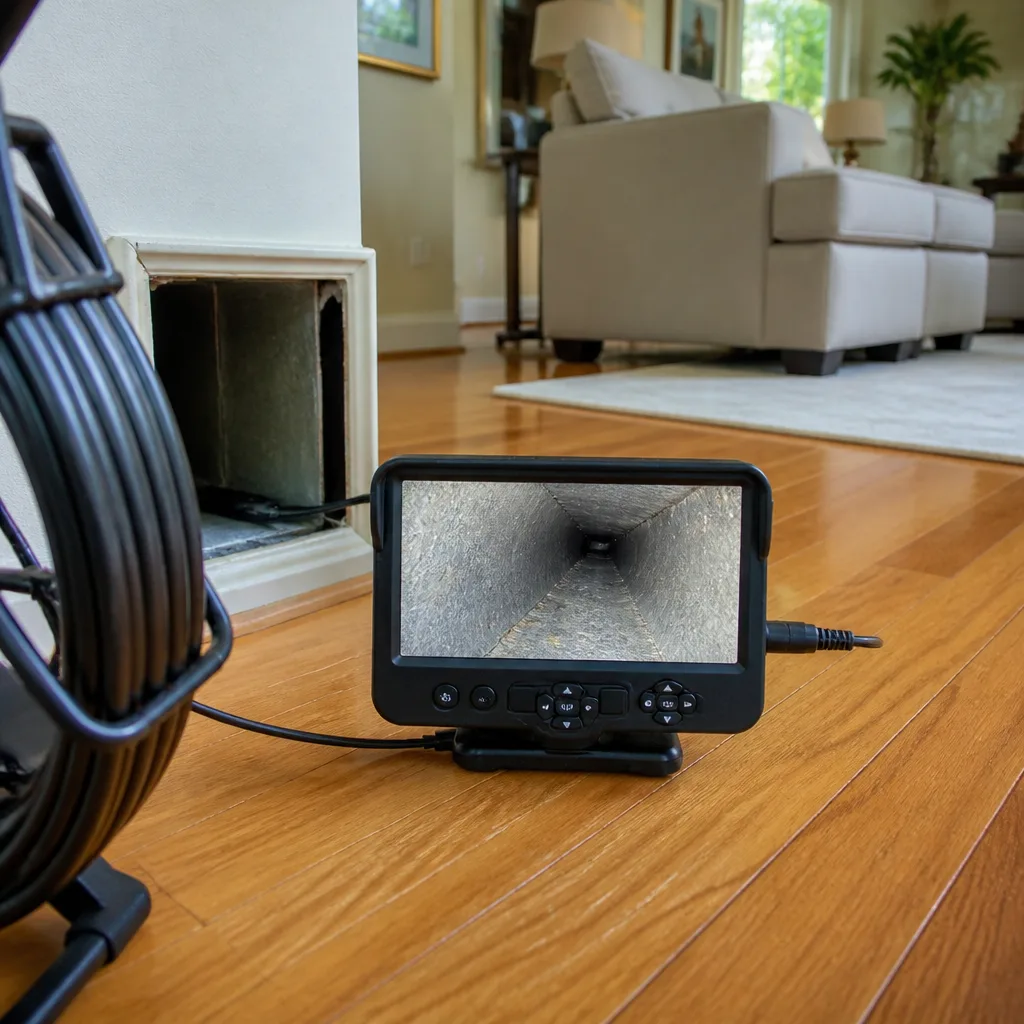 Camera inspection
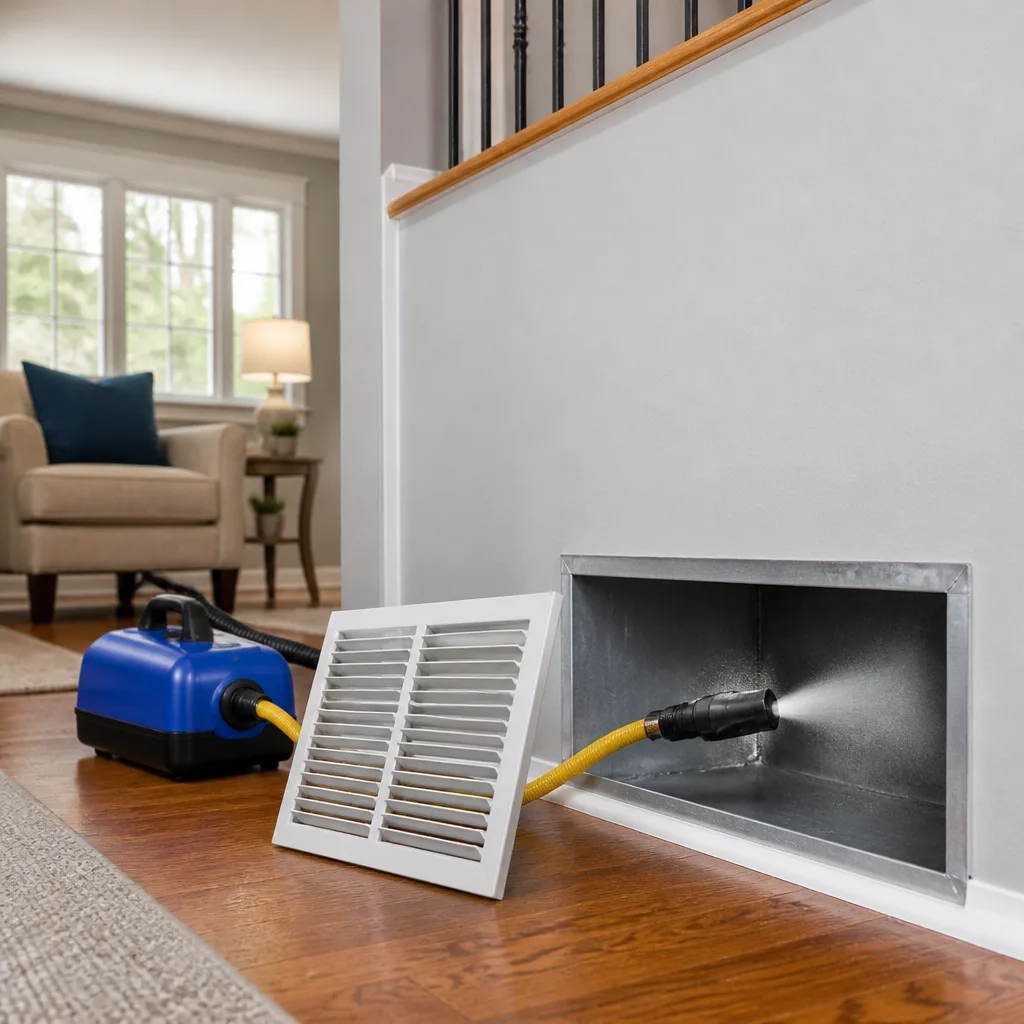 Sanitizing & deodorizing
Whole-system duct and dryer vent check with before-and-after photos - you see exactly what came out of your vents
That "$99 whole-house special" is a bait ad - the real number appears once they are in your hallway, or the "clean" is a shop-vac at the register. We photograph the inside of your ducts before and after instead.
The Complete Guide to Air Duct Cleaning in Greenwich Village
Most Greenwich Village apartments were built before central HVAC existed. The ductwork in them was retrofitted, lengthened, rerouted through closets, or jury-rigged across several renovations. That single fact changes how duct cleaning has to work here. A crew that skips the inspection phase and goes straight to a vacuum is cleaning blind, and in a pre-war co-op or a converted loft, blind cleaning can stir debris into a living space instead of removing it. This guide walks through the full process as it applies to the building stock you actually live in: diagnosis, containment, agitation, extraction, verification, and the repair and sanitizing work that often surfaces mid-job. You’ll learn what professional equipment does that a shop-vac can’t, and how to tell the difference before you book.
Quick Answer
Air duct cleaning in Greenwich Village is a diagnostic-first job, not a straight vacuum pass. Because most Village buildings predate central HVAC, ducts were retrofitted and often use flexible runs with tight turns, so a proper job starts with inspection, uses rotary-brush equipment like the Rotobrush system with negative-air containment, and ends with airflow and camera verification. Expect a whole-system service rather than per-vent pricing, with repair, sealing, and sanitizing handled in the same visit when problems are found.
Styles & brands we work with
- Whole-home duct cleaning
- Dryer vent cleaning
- Camera inspection
- Sanitizing & deodorizing
Table of Contents
- Why Pre-War Buildings Change the Whole Job
- How Village Duct Layouts Differ From New Construction
- The Diagnostic-First Approach: What Happens Before Cleaning
- Negative-Air Containment in Dense Multi-Unit Buildings
- Why Rotary-Brush Equipment Beats Vacuum-Only Cleaning
- Post-Cleaning Verification: How You Know It Worked
- The Full-Cycle Model: Clean, Seal, Sanitize in One Visit
- Dryer Vent Cleaning and the Fire Risk Most Crews Skip
Why Pre-War Buildings Change the Whole Job
Greenwich Village’s housing stock is old, and old buildings force a different cleaning method. When central air and forced-air heat arrived, they were added to structures designed for radiators, window units, and gravity systems. Ducts had to be threaded through ceiling cavities, dropped soffits, and closet chases. Some runs are sheet metal, some are flex, and many were modified again during later renovations. A cleaning method built for a new suburban house with straight, accessible trunk lines does not map cleanly onto that.
What this means in practice:
- Access points are limited. Retrofitted systems often have fewer registers and tighter service openings than new builds, so the equipment has to reach farther through each opening.
- Runs bend and change size. Flex duct squeezed through a closet makes sharp turns that trap debris where a straight vacuum can’t reach it.
- Mixed materials are common. One apartment can have old sheet-metal trunk lines feeding newer flexible branches, each needing a slightly different touch.
- Previous work is invisible. A duct run may have been rerouted two renovations ago. Inspection reveals what’s actually there.
In a Greenwich Village co-op or condo, that inspection step is not a formality. It’s the difference between a cleaning that removes what’s in the system and one that just makes noise near the registers. The team at Air Duct Cleaning Greenwich Village treats the assessment as the first real phase of the job, not a sales stop.
How Village Duct Layouts Differ From New Construction
New-construction ductwork is designed on paper and installed with the HVAC. Village ductwork evolved. That difference shows up in three recognizable patterns you’ll find across the neighborhood’s building types.
Pre-war co-ops and walk-ups. These buildings were heated with radiators or steam, and any forced-air system was added later. Ducts tend to be short, with fewer branches and more retrofit constraints. Returns are sometimes undersized because they were an afterthought.
Converted lofts and former commercial space. Loft conversions often start life as manufacturing or warehouse space with exposed structure. When those floors were turned residential, ductwork was added along exposed ceilings or dropped bulkheads. Runs can be longer, and the original equipment may have been sized for commercial use, not a single apartment.
Mixed-use buildings. In a building with shops on the ground floor and apartments above, HVAC systems are sometimes shared or stacked close together. Duct runs from different units can pass near each other, which makes containment during cleaning more important than in a detached house.
Each pattern needs a different plan. A loft with long exposed runs may need more agitation passes along the accessible length, while a walk-up with short, tight runs may need more careful access work at each register. The method follows the layout, not the other way around.
The Diagnostic-First Approach: What Happens Before Cleaning
Before any equipment touches the system, a diagnostic-first cleaner maps what’s there. This is the phase most low-bid crews skip, because it takes time and doesn’t look like work. It’s also where most of the job’s value sits.
A proper pre-cleaning assessment walks through these steps:
- Register and access survey. Every supply and return is located and opened, and the technician notes which are reachable and which are blocked by furniture, cabinetry, or finish work.
- System mapping. The technician traces how trunk lines and branches connect, notes flexible versus rigid sections, and identifies any runs that were added or rerouted during past renovations.
- Debris and contamination check. Visual inspection of accessible duct interiors reveals the debris load and whether there’s visible microbial growth or moisture. That distinction changes the cleaning plan.
- Leak and gap inspection. Seams, joints, and disconnected sections are noted. A leaky duct system pulls in unconditioned air and dust from wall cavities, so cleaning it without sealing it is a temporary fix.
- Airflow baseline. Airflow at registers is measured and recorded for comparison after cleaning. This becomes the verification benchmark.
In an older Greenwich Village building, the diagnostic phase often turns up something the resident didn’t know about: a disconnected flex run behind a closet, a return that draws from a wall cavity, or a run that was never connected to the system at all. Finding that before cleaning prevents a lot of confusion after.
Negative-Air Containment in Dense Multi-Unit Buildings
Cleaning ducts in a Village co-op means cleaning inside a shared building. Every register you open has living space on the other side, sometimes belonging to a neighbor through a shared wall or ceiling cavity. That’s why containment matters here more than it does in a detached house on its own lot.
Negative-air containment does one job: it keeps debris and dust inside the work area and moves it toward the collection unit instead of into the room. Professional contractors use negative-air machines and filtration units for exactly this reason in mold and hazard remediation, where the same principle applies. Our approach uses Abatement Technologies negative-air and filtration equipment so that when a register is opened, air pressure pulls inward rather than blowing dust out.
Why it matters in Greenwich Village specifically:
- Close quarters. Apartments share walls and ceilings, and a cleaning that blows dust into one unit can travel to another through shared cavities.
- Shared systems. In mixed-use buildings, duct runs from different units can pass near each other.
- Interior finish work. Pre-war apartments often have plaster, original moldings, and finishes that don’t tolerate a cloud of fine dust.
- Occupied units. Residents often stay home during the job, so the work area has to stay contained.
Containment is not decoration. It’s the difference between a cleaning that leaves the apartment tidy and one that requires a second cleaning of the furniture. When you’re comparing quotes, a crew that can’t describe its containment setup is a crew that hasn’t thought about it.
Why Rotary-Brush Equipment Beats Vacuum-Only Cleaning
Vacuum-only duct cleaning removes loose debris from the surfaces a nozzle can reach. It doesn’t disturb debris that has bonded to duct walls, and it doesn’t clean the full circumference of a flexible run that has bends in it. In a pre-war Village building, where ducts bend and change direction, that gap is significant.
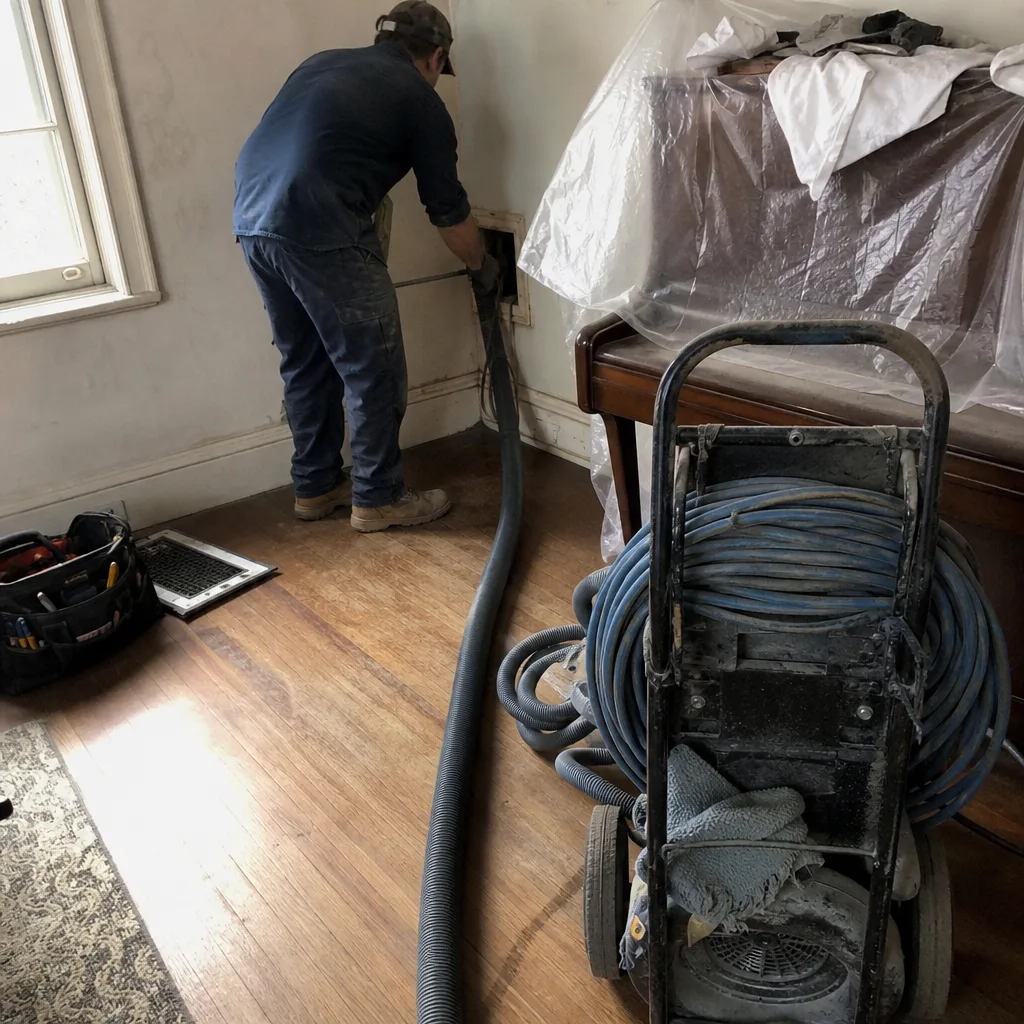
Rotary-brush equipment works differently. A flexible rotary brush is fed through the duct, whirling as it moves, so it contacts the full interior surface and breaks loose what has adhered. Paired with a high-powered vacuum extraction unit, the loosened debris is pulled out of the system at the same time. This is why the air duct cleaning approach we use relies on a professional-grade Rotobrush system: it agitates and extracts in one pass, which matters most on the flexible ductwork common in retrofitted buildings.
The same logic explains why the Nikro line of HVAC cleaning equipment shows up on professional jobs. These machines are built for commercial contractors, not adapted from consumer vacuums. In our experience, the difference is most obvious on a flexible run with several tight turns. A vacuum-only pass reaches the straight sections. A rotary brush reaches the rest.
What that means for a Village apartment job:
- More of the duct’s interior surface gets contacted, not just the middle of the run.
- Flex duct with bends is cleaned along its full length, not just the reachable portions.
- Adhered debris on sheet-metal trunk lines is broken loose instead of left in place.
- The extraction unit captures what the brush loosens during the same pass.
If a quote describes the method as “vacuum out the ducts,” ask what equipment they’re using. That answer tells you whether the job is a light surface pass or a real cleaning.
Post-Cleaning Verification: How You Know It Worked
Verification is what separates a documented cleaning from one you have to take on faith. It’s also the step that answers the fairest question a homeowner can ask: how do I know the work was actually done? A professional job leaves evidence, and a documented one gives you the evidence.
Post-cleaning verification typically includes:
- Airflow re-measurement. The registers measured during the diagnostic phase are measured again. A cleaning that removed real debris often shows a measurable airflow difference at some registers.
- Visual camera inspection. A camera is run into accessible duct sections to confirm the interior is clean after extraction. This is a direct check of the result, not an assumption.
- Filter-condition baseline. The filter’s condition is noted after cleaning so you have a comparison point for future maintenance. A fresh filter right after duct cleaning gives a cleaner starting state.
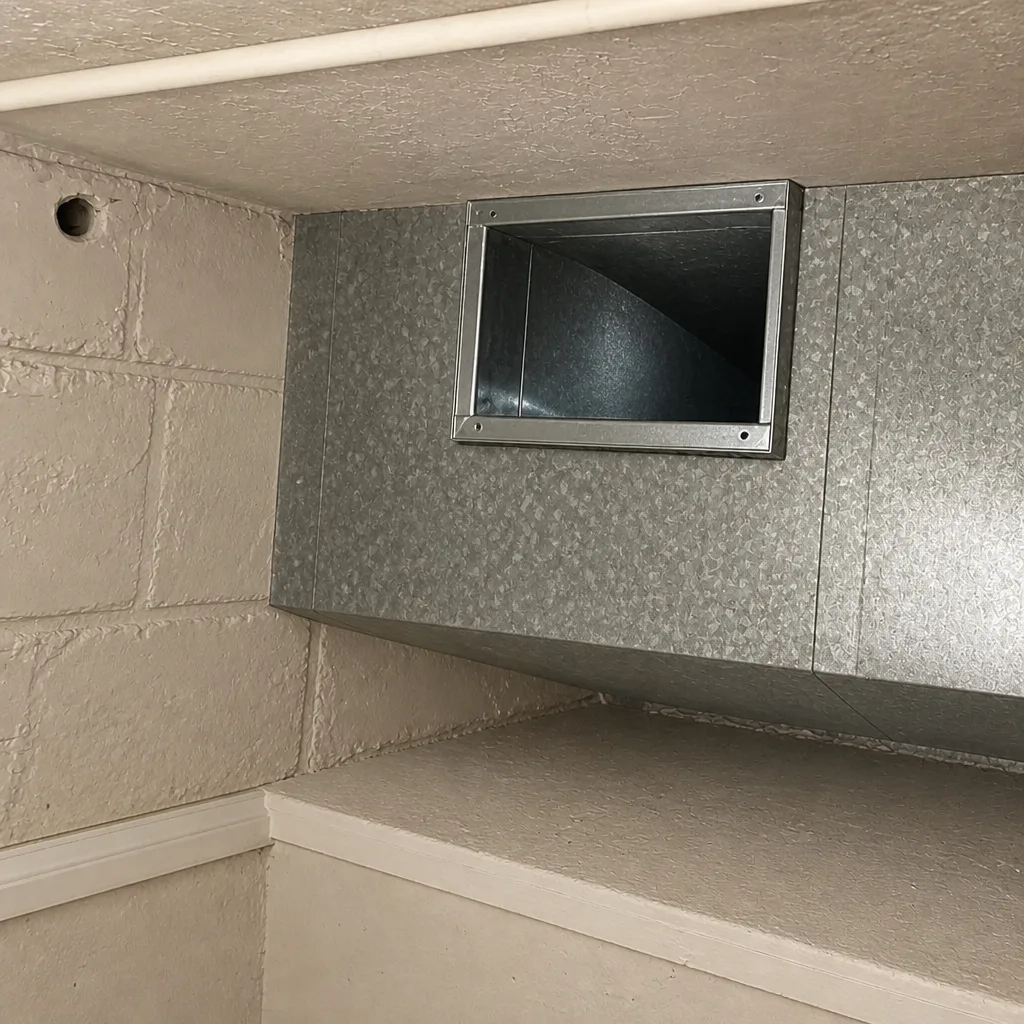
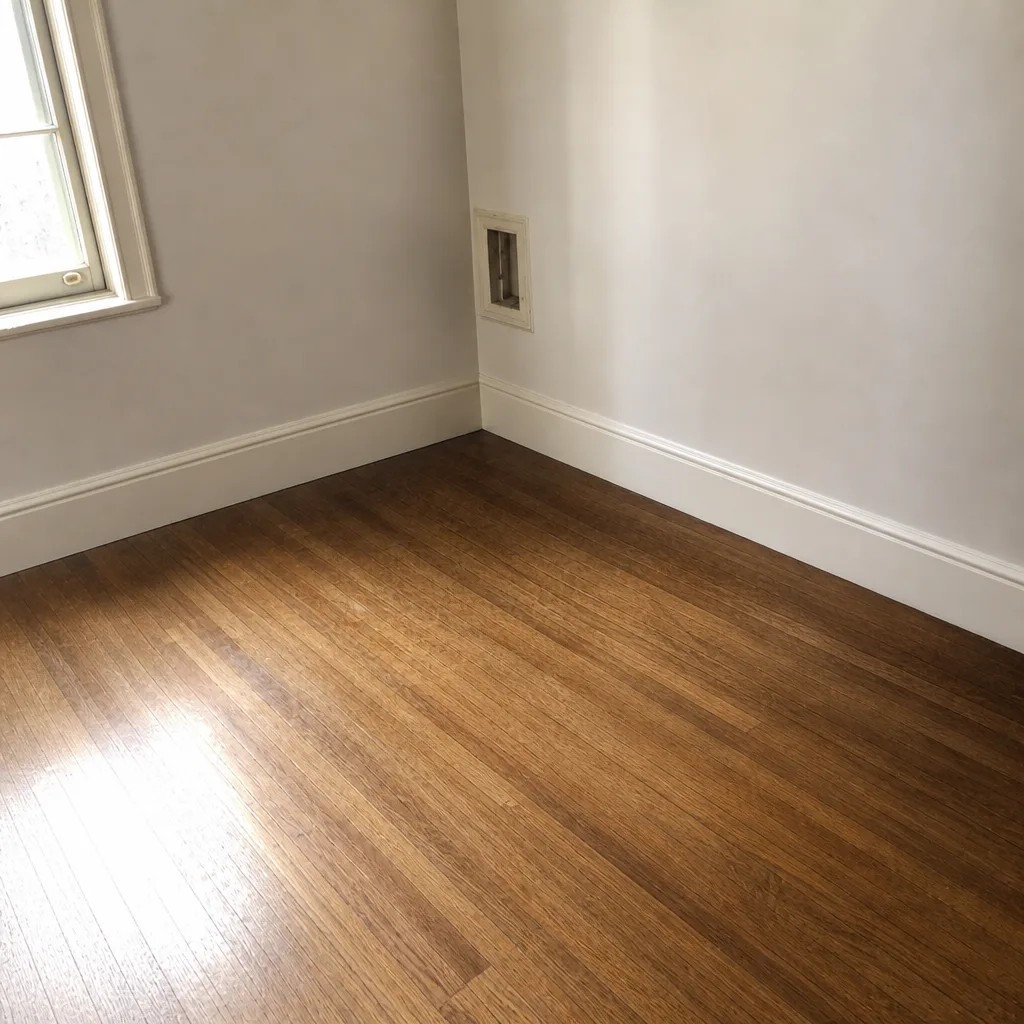
- Before-and-after photos. Photos taken of the system before and after show what was captured. A documented job leaves a record you can check against the camera inspection.
- Written summary. A brief note on what was found during the diagnostic phase, what was cleaned, and what was repaired or sealed is the closing record of the job.
In a co-op, that documentation has a second use. If you’re a landlord or property manager, a written record of the work is useful for building files and resident communication. A crew that doesn’t document its work leaves you with nothing to show.
The Full-Cycle Model: Clean, Seal, Sanitize in One Visit
Duct cleaning often turns up problems that a one-service crew can’t address: a disconnected flex run, a leaky seam that pulls wall-cavity air into the system, or visible microbial growth on a damp section of duct. A cleaning-only visit ends with a list of those problems and the customer left to find a second contractor. In a Greenwich Village co-op, where scheduling building access is its own chore, that’s a real disruption.
The full-cycle model keeps those three phases in one visit:
Clean. Rotary-brush agitation and vacuum extraction of the accessible duct system, with negative-air containment in place.
Repair and seal. Gaps, disconnected sections, and leaky seams found during the job are addressed on the spot. Sealing matters because a leaky system pulls in unconditioned, dusty air, which undoes part of the cleaning’s value if left open.
Sanitize. Air quality and sanitizing work treats the microbial growth and airborne contaminants that debris removal alone doesn’t address. This is where the scope extends past cleaning into something closer to a whole-home air quality job.
That extension is also where HVAC cleaning fits: the air handler, coils, and related components work together with the duct system, so treating one and not the other leaves a gap. If your apartment already has a Honeywell or Aprilaire whole-home air quality system installed, the work complements it rather than conflicting with it, which is a less common combination among duct-cleaning services.
One visit, one access schedule, one set of records. For residents dealing with a tight co-op board schedule, that’s the practical argument for the full-cycle approach, regardless of the technical one.
Dryer Vent Cleaning and the Fire Risk Most Crews Skip
Dryer vent cleaning sits on the same service menu because it addresses a documented residential fire hazard that most HVAC-only cleaners decline to handle. Lint accumulates inside the vent run, and when airflow is restricted, the heat in the dryer rises. That’s why manufacturers and fire officials treat a clogged dryer vent as a real risk rather than a housekeeping concern.
In a Greenwich Village apartment, dryer vent runs are often longer or more convoluted than in a suburban house, because the dryer sits in a closet or bathroom far from the exterior wall. Long runs with multiple elbows collect lint faster and are harder to inspect from either end. That makes dryer vent cleaning a natural add-on to a duct cleaning visit: the same access schedule covers both jobs, and a lint-clogged vent run is exactly the kind of hidden problem a whole-system inspection is likely to find.
Signs the dryer vent needs attention:
- Clothes take noticeably longer to dry than they used to.
- The dryer exterior gets hot to the touch during a cycle.
- Lint appears around the outside vent hood or behind the dryer.
- The vent run is long or has multiple elbows that hold lint.
If the lint screen fills up faster than expected or the outside vent flap barely moves during a cycle, that’s a reasonable time to have the vent run inspected. It’s a short job compared to a duct cleaning, and it’s one most cleaning crews don’t offer at all.
Common Mistakes to Avoid
- Booking on price alone without asking about equipment. The lowest quote is usually the crew that shows up with a shop-vac and a hose. Ask what machine they’re using, and if the answer is vague, keep looking. In Village pre-war buildings, a light surface pass does very little.
- Skipping the inspection phase. A crew that starts cleaning before mapping the system is working blind. Retrofitted ducts hide disconnected runs, leaky seams, and rerouted branches, and a diagnostic step is the only way to find them.
- Ignoring leaks and gaps found during cleaning. A leaky duct system pulls dust back in from wall cavities. Cleaning without sealing is a temporary fix, which is why a crew that can’t repair what it finds leaves you with a half-done job.
- Accepting per-vent pricing. Per-vent pricing makes a quote look cheap and then expands once the technician is on site. Whole-system pricing agreed before work starts is the honest model and worth requesting explicitly.
- Not asking for post-cleaning verification. A cleaning without a camera inspection, airflow measurement, or before-and-after photos leaves you to take the result on faith. Ask up front what verification the crew provides.
- Cleaning ducts in a multi-unit building without containment. In a Greenwich Village co-op or mixed-use building, a crew that doesn’t set up negative-air containment can spread dust into a neighboring unit. That’s a problem for you and for the neighbor.
- Treating the dryer vent as separate. Since lint accumulation in the vent run is a documented fire hazard, and a duct cleaning visit is already set up to reach those runs, postponing the vent inspection wastes the access. Bundle it while the crew is there.
See the difference
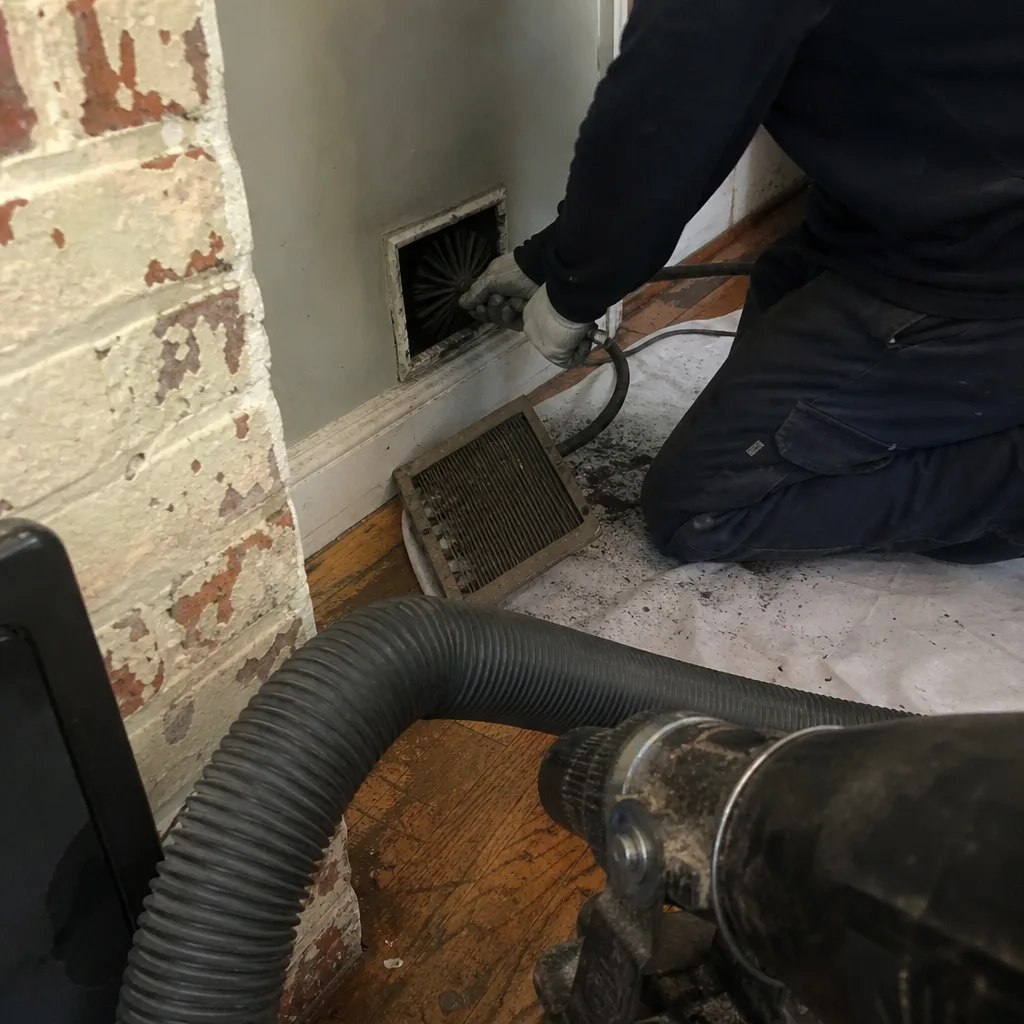 Before
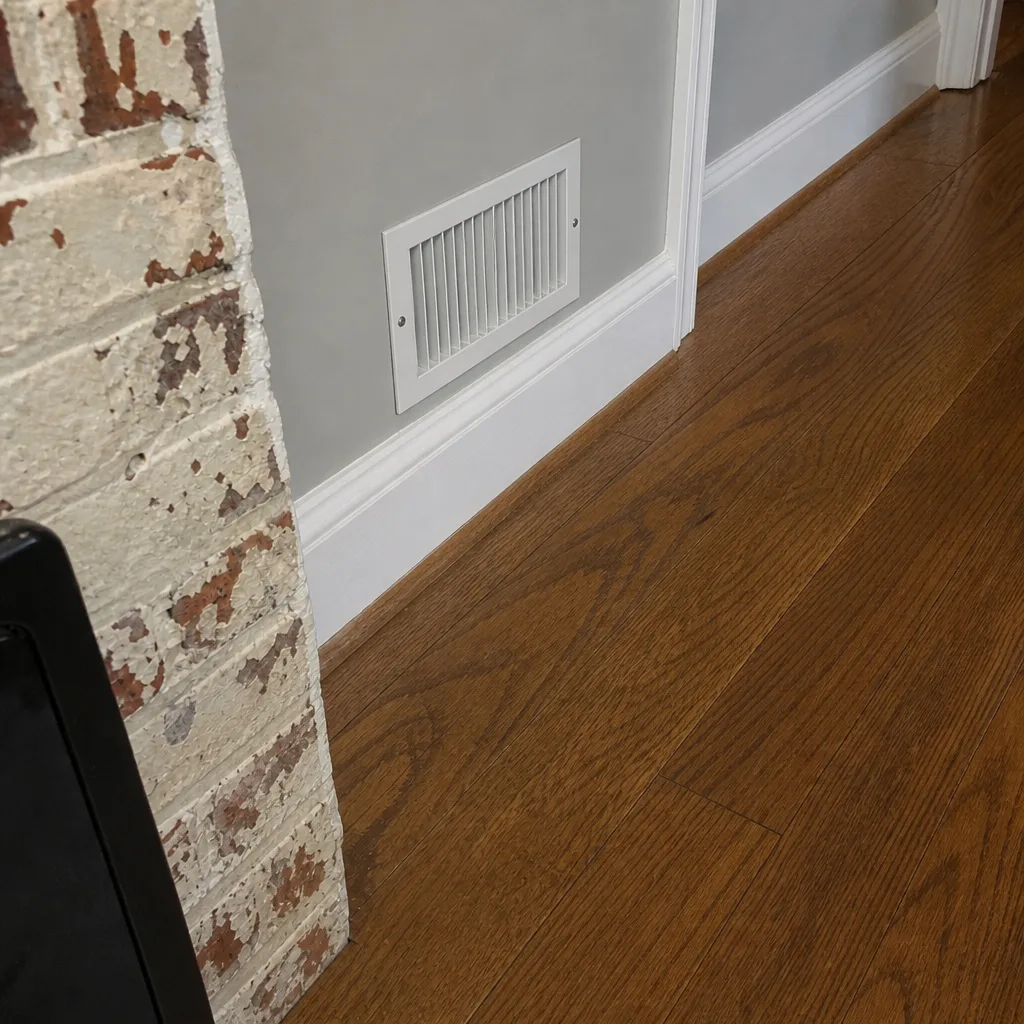 After
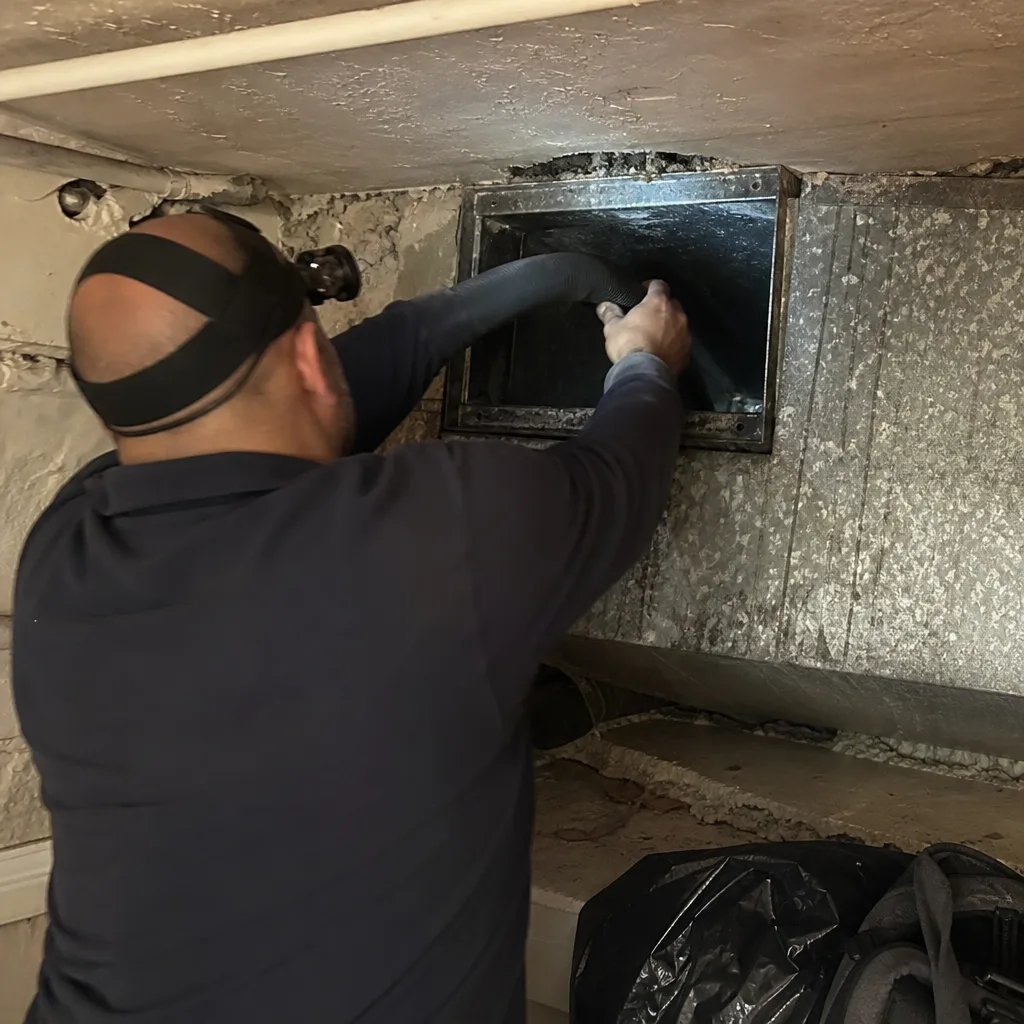 Before
 After
 Before
 After
When to Call a Professional
Some signs are clear enough that a call makes sense without waiting. Visible dust puffing out of a register when the system starts is one. A persistent musty odor that returns even after cleaning the room is another. If anyone in the household has allergies or respiratory sensitivity and the duct system hasn’t been serviced in a long time, a diagnostic visit is reasonable. If you’ve noticed the dryer taking longer to dry clothes, that’s a vent issue, not just a laundry annoyance. And if a previous crew left you with a quote that expanded once the technician arrived, a diagnostic-first visit sets a whole-system price before work starts. Air Duct Cleaning Greenwich Village offers free estimates in Greenwich Village: call (855) 337-2008. We answer 24/7. Fast dispatch from 7am to 7pm, Sunday through Friday.
Frequently Asked Questions
Cost depends on the size and layout of the system, so it’s priced per whole system by a written estimate rather than per vent. A pre-war co-op with a retrofitted system and limited access points is a different job from a loft conversion, which is why the diagnostic visit comes first. The estimate you receive is the price you pay for the work described, agreed before any equipment is set up. Call (855) 337-2008 for an exact quote. Estimates are free.
Cheap quotes usually skip a phase. They may be a vacuum-only pass with no rotary-brush agitation, no negative-air containment, and no post-cleaning verification. In a Greenwich Village building, those omissions matter more than in new construction, because retrofitted ducts hide problems that need a diagnostic step to find. A whole-system price agreed before work starts, with documented before-and-after photos and camera verification, is the honest comparison point. Call (855) 337-2008 to talk through the difference for your building.
A professional cleaning ends with evidence: airflow measurement before and after, camera inspection of accessible duct interiors, and before-and-after photos of your system. These are the records you check against the summary in the written job note. Ask any contractor what verification they provide before booking. Call (855) 337-2008 to ask what our verification package includes.
There’s no single schedule that fits every building. Factors that push toward more frequent cleaning include visible dust from registers, musty odors, recent renovation work, and a long gap since the last cleaning. In older Greenwich Village apartments with retrofitted ductwork, the filter-condition baseline recorded after cleaning is a useful reference for knowing when the system is ready again. Call (855) 337-2008 if you’re unsure whether it’s time.
Yes, and containment is the reason the job can be done safely in a shared building. Negative-air equipment and filtration units keep debris inside the work area rather than spreading it into a neighboring unit, which matters in a co-op or a mixed-use building where units share walls and ceilings. If you’re a landlord or property manager coordinating with a building, ask about documentation for the building file. Call (855) 337-2008 to schedule a diagnostic visit.
Yes. Dryer vent cleaning is part of the same service visit, which matters because a long vent run in an apartment closet collects lint faster than a short one and addresses a documented fire hazard. Combining the two means one access schedule covers both jobs. Call (855) 337-2008 for a free estimate on either service.
The Bottom Line
If you live in a Greenwich Village apartment, your ductwork was almost certainly added to a building that didn’t start with central HVAC, and that shapes every step of the job. Diagnostic-first inspection, professional rotary-brush equipment with negative-air containment, and post-cleaning verification are the three things that separate a real cleaning from a surface pass. The full-cycle model, which handles cleaning, repair and sealing, and sanitizing in one visit, keeps the disruption to a single access schedule in a building where that schedule is itself a hurdle. And dryer vent cleaning belongs on the same visit, because the lint hazard is real and the access is already there. Call (855) 337-2008 for a free estimate. We answer 24/7. Fast dispatch from 7am to 7pm, Sunday through Friday.
Written by the team at Air Duct Cleaning Greenwich Village.