
Last updated November 22, 2026
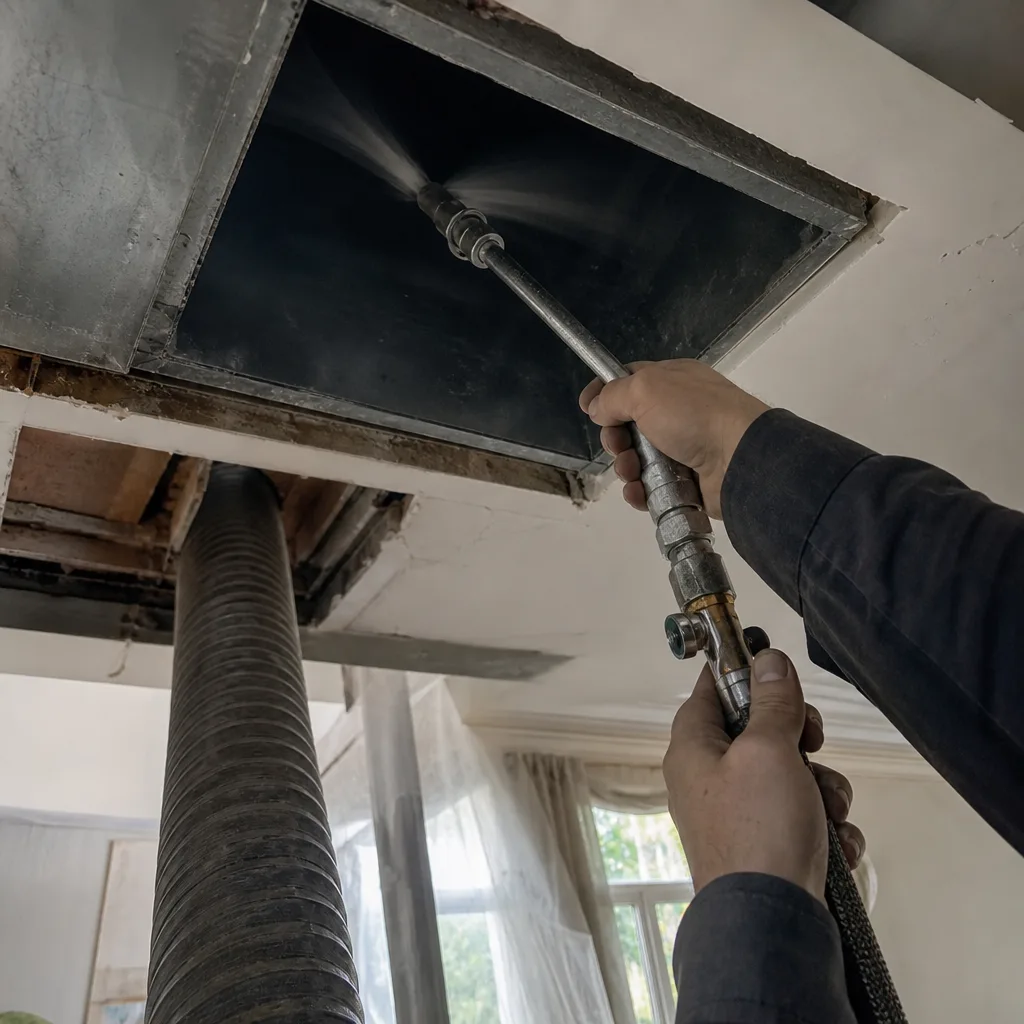
 Whole-home duct cleaning
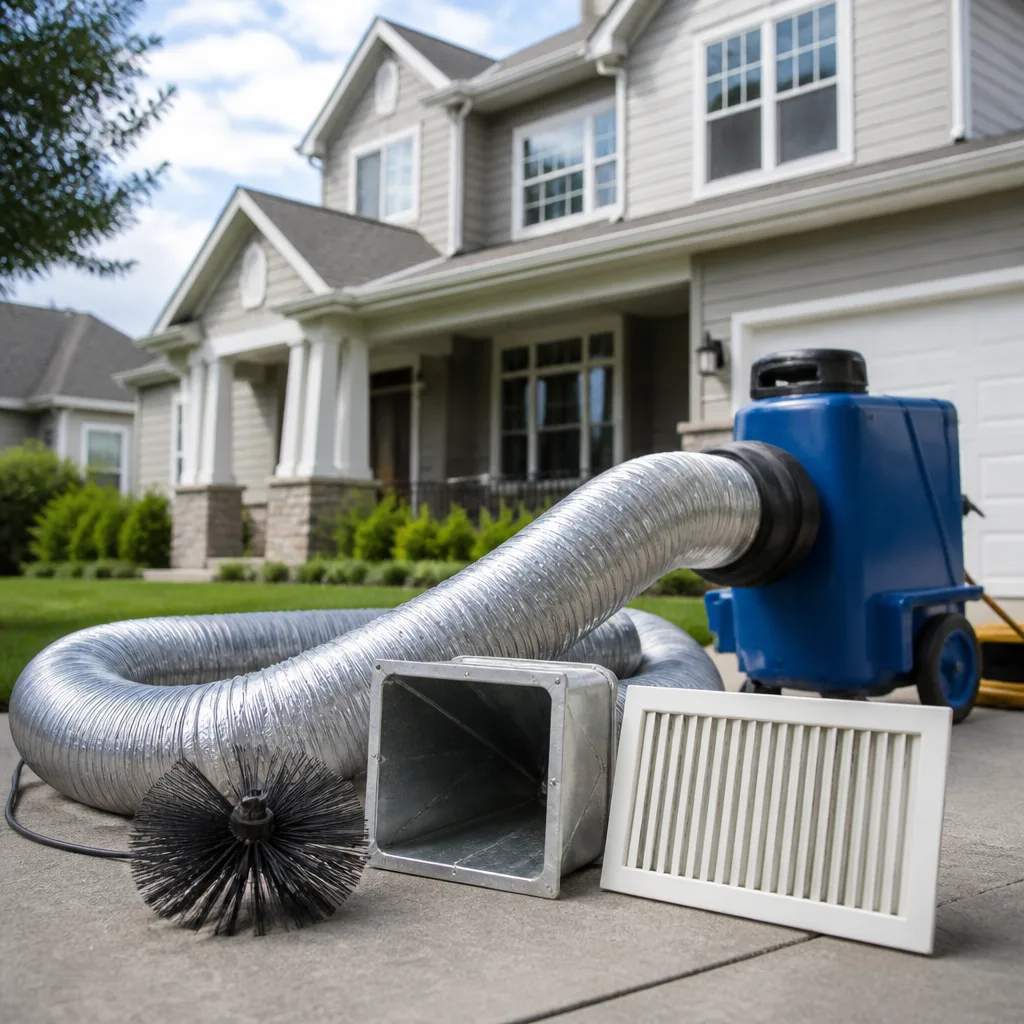
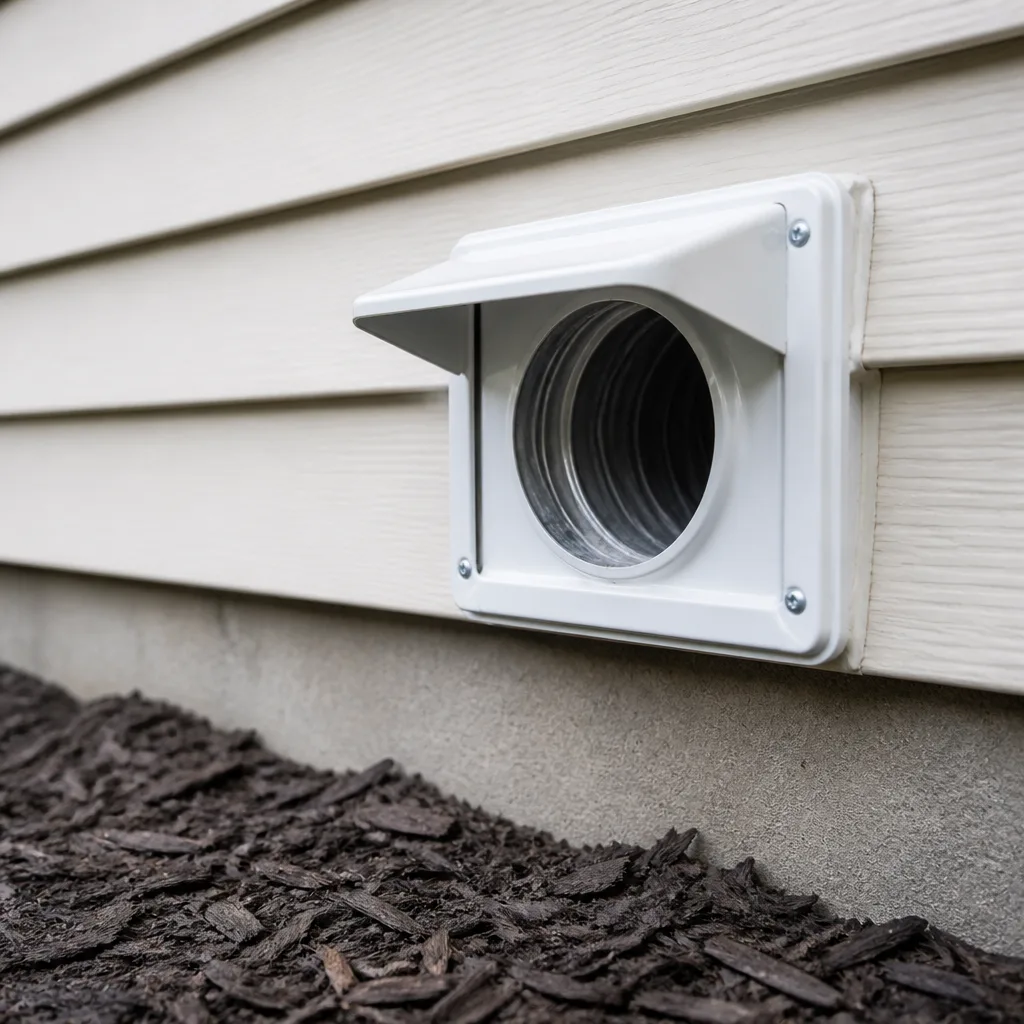 Dryer vent cleaning
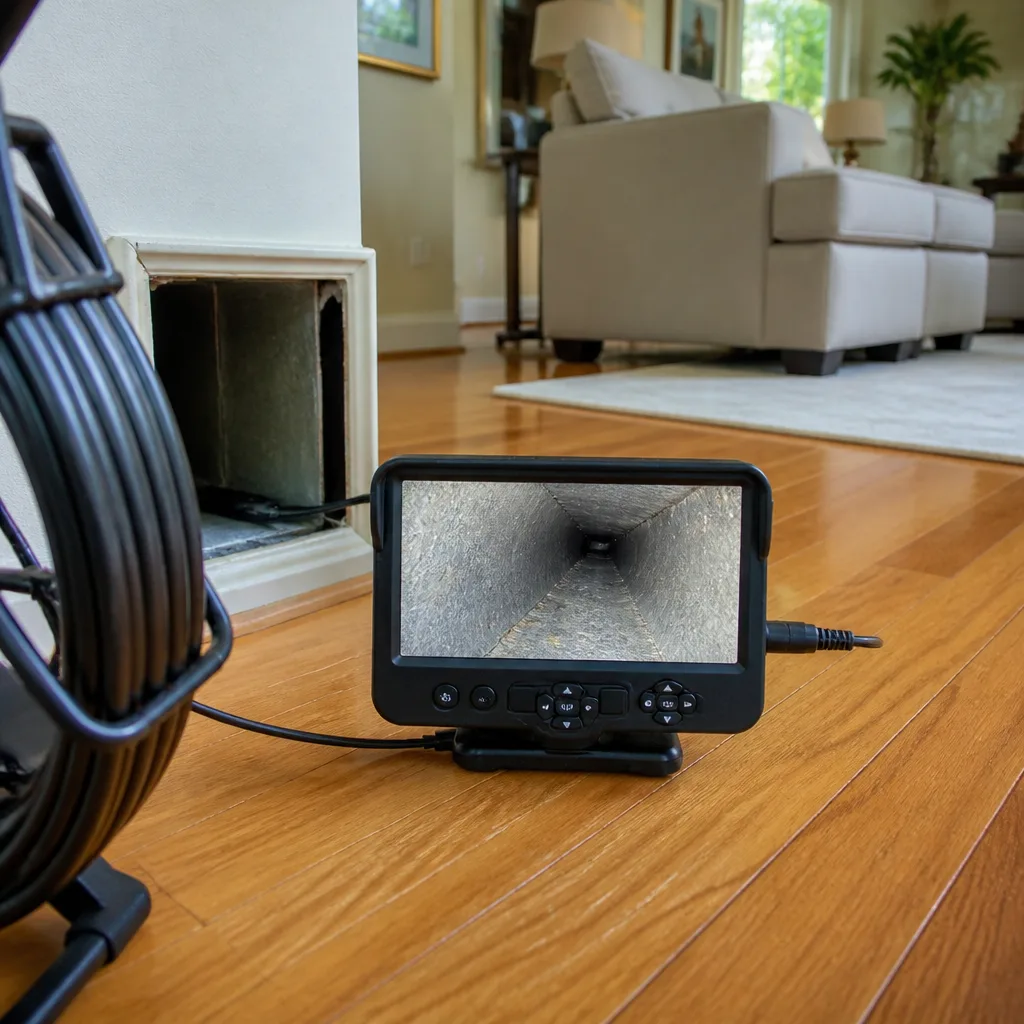 Camera inspection
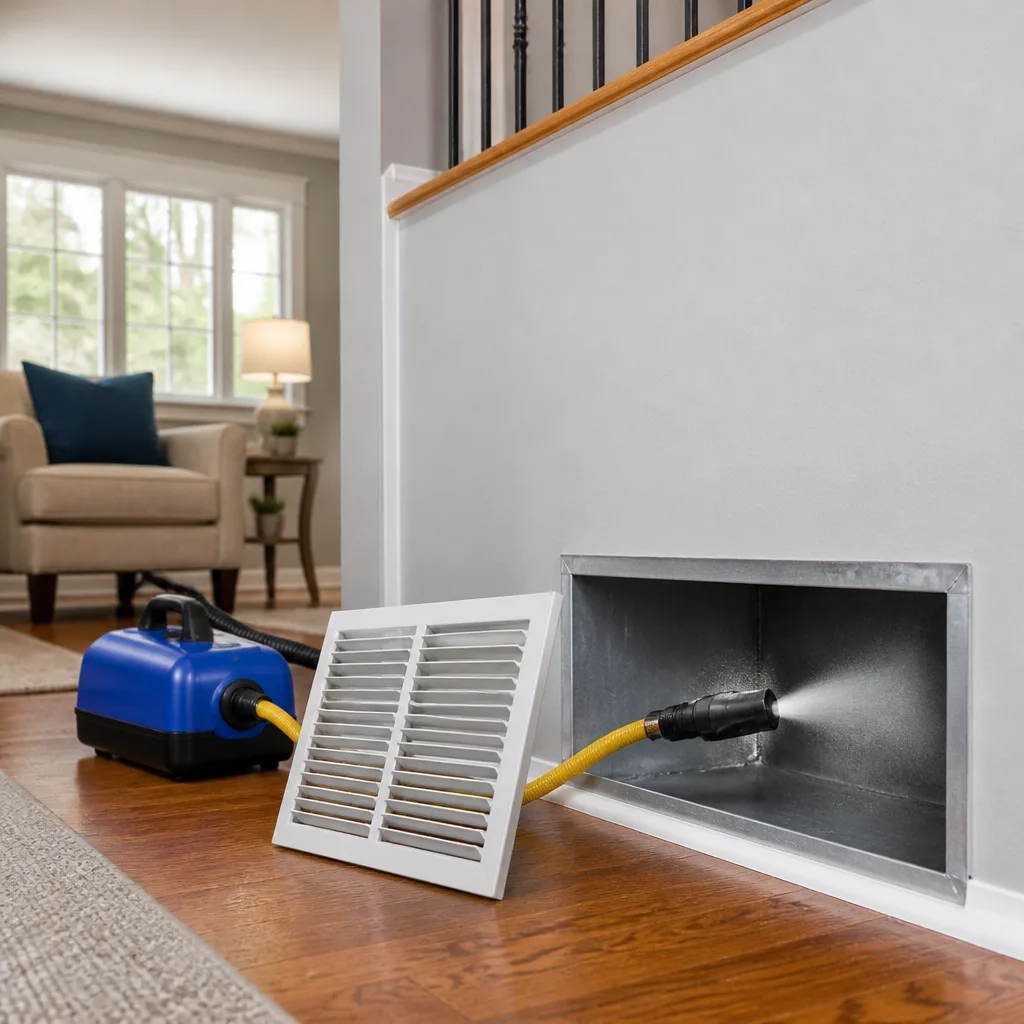 Sanitizing & deodorizing
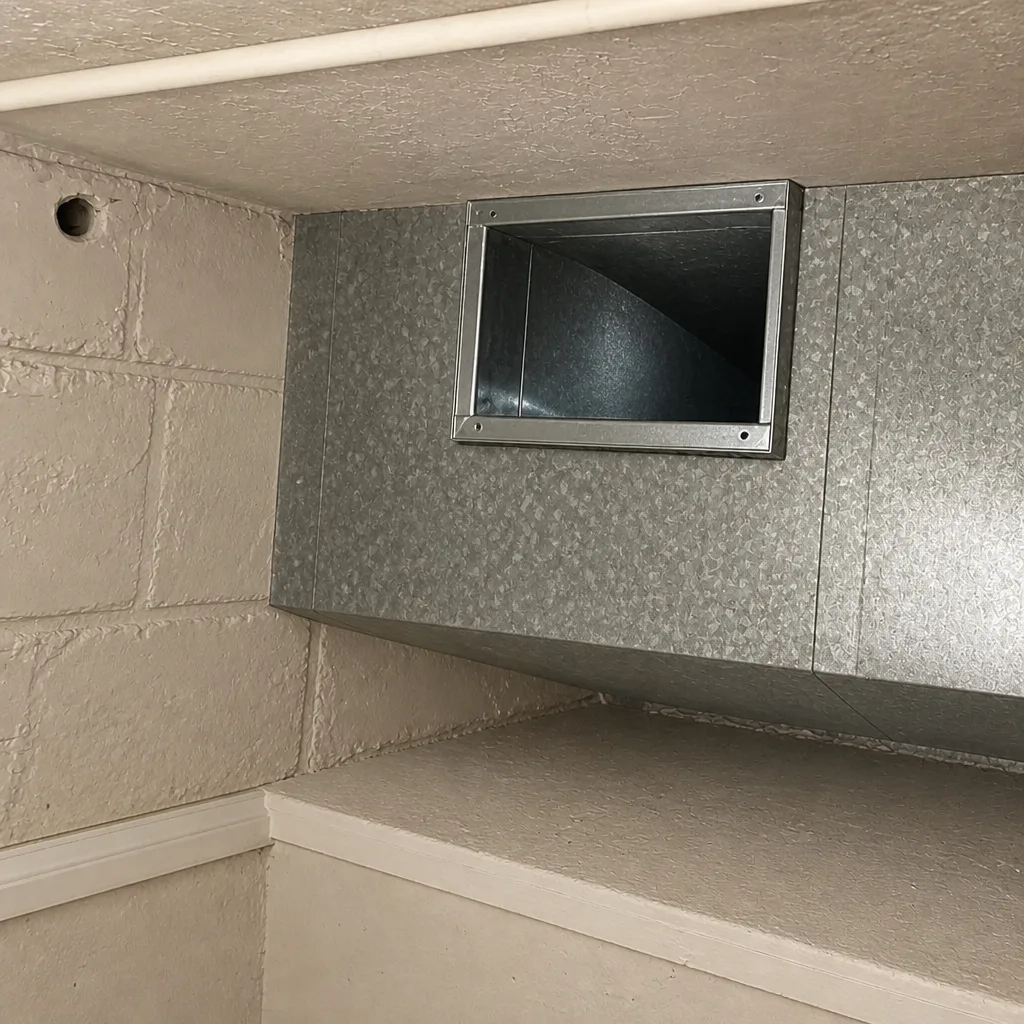
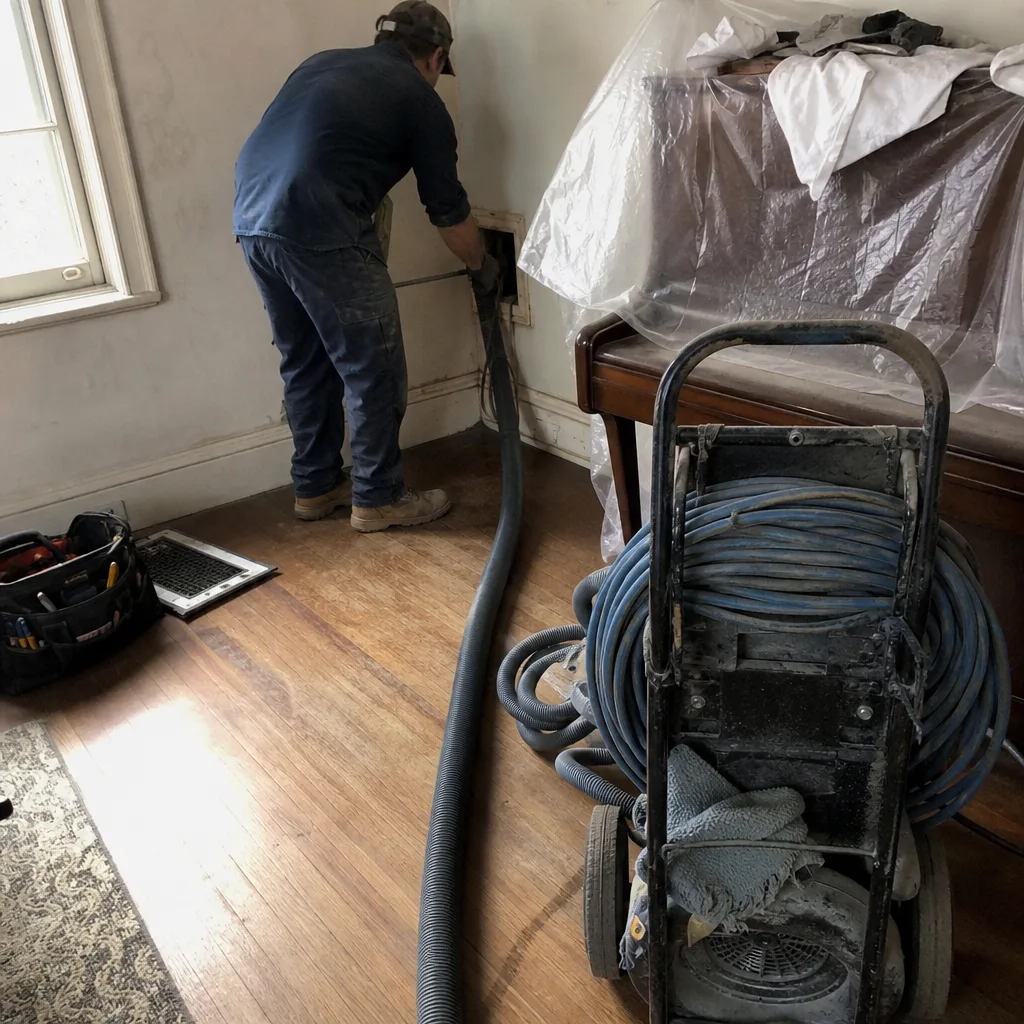
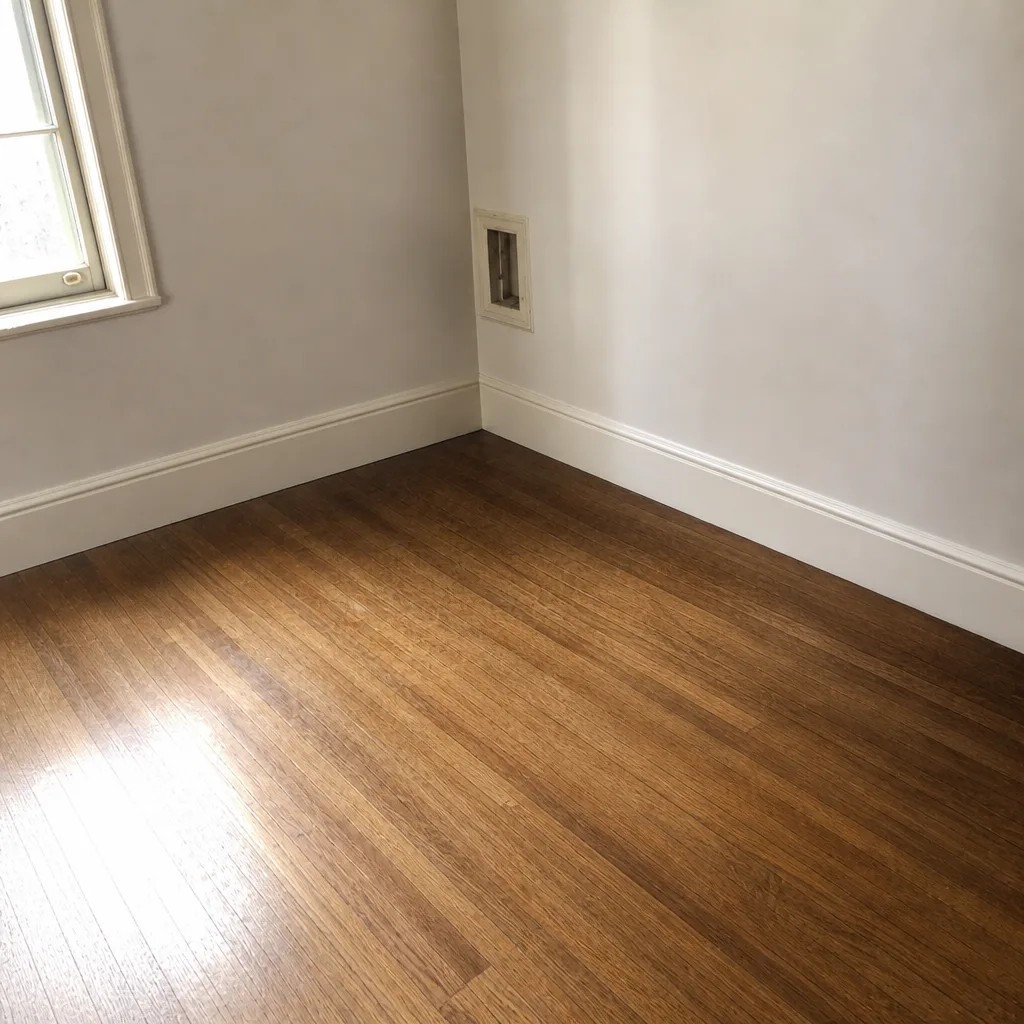
Whole-system duct and dryer vent check with before-and-after photos - you see exactly what came out of your vents
That "$99 whole-house special" is a bait ad - the real number appears once they are in your hallway, or the "clean" is a shop-vac at the register. We photograph the inside of your ducts before and after instead.
Air Duct Cleaning Emergency Preparedness Guide for Greenwich Village Homes
Most people think of duct problems as a slow, invisible nuisance. In a Greenwich Village building, they can turn serious fast. A water intrusion above you, a small kitchen fire two floors down, or a gut renovation next door can push moisture, soot, or construction dust into shared ductwork before anyone smells anything. The tricky part is that the damage starts on day one, and the wrong first move (usually, running the HVAC system) can spread contamination through the whole line. This guide walks you through the hours and days after three specific events that turn ductwork into an emergency here, and what to do about each before damage becomes permanent.
Quick Answer
After flooding, fire or smoke damage, or a major renovation in a Greenwich Village building, treat the duct system as contaminated until it’s been assessed. Shut the HVAC system off, don’t run the air handler to “dry things out,” and get a professional inspection that identifies the type of contamination before any cleaning happens. Water, soot, and construction dust each need a different protocol, and standard surface cleaning is inadequate for all three without a prior assessment.
Styles & brands we work with
- Whole-home duct cleaning
- Dryer vent cleaning
- Camera inspection
- Sanitizing & deodorizing
Table of Contents
- Why Flooding Is the First Duct Emergency
- Post-Fire and Smoke Damage: Soot and the HVAC System
- Post-Renovation: Construction Dust and Shared Chases
- How Fast Each Contamination Type Must Be Addressed
- Step-by-Step Emergency Response Protocol
- How to Document Duct Condition for Insurance
- Why Equipment Matters in an Emergency Job
- Common Mistakes to Avoid
Why Flooding Is the First Duct Emergency
Water is the contamination that does the most invisible damage. After a water intrusion event in an apartment above yours, your HVAC ductwork may have drawn moisture-laden air through the system for days before you noticed. By that point, duct liner saturation and early microbial growth are already in progress. It’s not a future risk; it’s happening behind the grilles while the system runs normally.
What makes this specific to Greenwich Village is the building stock. Many of these are pre-war walk-ups and converted townhouses with ductwork routed through shared chases, interior walls, and low-clearance ceiling cavities. Water from an upstairs leak doesn’t stay in one apartment. It follows the chase, wicks into fiberglass liner, and pools in low spots in flexible duct. The visible damage (a stained ceiling, a warped baseboard) is often the smallest part of it.
What to check in the first 24 hours
- Any musty or damp smell that appears near supply or return grilles, especially on the apartment below the leak
- Visible water staining on ceiling drywall near ductwork runs or in closets where chases pass through
- Condensation on grilles, or a cold, clammy feel to the air when the system runs
- HVAC filter that is wet, clumped, or showing dark patches
- Peeling paint or bubbling plaster along a ceiling line that follows a duct path
What to shut off and why
Turn the HVAC system off at the thermostat. Don’t run the fan in “on” mode to circulate air, and don’t run the air handler to dry things out. Running the system pulls humid air through the entire duct run and pushes moisture into liner that hasn’t been wet yet. We’ve seen buildings where the apartment with the leak was dried within a day, but the apartment three floors down ended up with microbial growth in the ducts because the system kept running. The shutoff is the single most important action in the first hour.
Once the system is off and the water source is stopped, the next step is assessment. That’s where a professional with the right equipment matters. A proper inspection looks at liner saturation, the condition of flex duct low points, and whether microbial growth has started. In our experience, water-damaged liner almost never dries out to a safe condition on its own. It either needs to be cleaned and treated or, in worse cases, replaced. Our air duct cleaning Greenwich Village service includes that assessment before any cleaning happens, because the protocol for a saturated liner is different from the protocol for dry dust.
Post-Fire and Smoke Damage: Soot and the HVAC System
Soot is smaller and stickier than most people realize. A fire two apartments away can push fine soot particles into your ducts through the shared returns and the stack effect that runs up old Greenwich Village buildings. Those particles are small enough to stay airborne for hours. They settle into duct surfaces, coat the inside of the air handler, and lodge in the blower wheel. Standard duct cleaning that agitates debris and vacuums it up is not enough on its own, because agitating dry soot without proper collection simply re-suspends it into the living space.
The right approach uses HEPA-rated collection and negative-air containment. That means the vacuum system captures particles at HEPA efficiency, and the work area is kept under negative pressure so no soot escapes into the apartment during cleaning. This is the same containment principle used in mold remediation and hazardous-material work, and the equipment that provides it is purpose-built. Abatement Technologies negative-air units are one example of equipment specified for exactly this situation. Cleaning a soot-contaminated system without that containment is like sweeping a dusty room with the windows open and the fan on.
When cleaning is enough and when liner replacement is required
If the soot is surface-level on rigid duct and the liner is intact, cleaning plus sanitizing usually resolves it. If the liner is charred, blistered, or has absorbed smoke odor that returns after cleaning, replacement is the honest answer. In our experience, liner replacement comes up more often after a fire than after any other event, because heat and smoke together degrade the liner material in a way that cleaning can’t reverse. A written assessment before work starts tells you which one you’re facing.
Rooms closest to the fire, and the supply runs that served them, are usually the worst. But don’t assume the far end of the building is clean. Soot travels. It shows up in the return duct on an upper floor as easily as the room next to the fire. Professional air duct cleaning after a fire should start with an inspection of the full system, not just the obvious rooms.
Post-Renovation: Construction Dust and Shared Chases
Renovation dust is the emergency people most often miss. It doesn’t look like an emergency. It looks like a fine gray film on the furniture. But drywall dust is abrasive, and it does real damage to the blower motor, the blower wheel, and the evaporator coil when it gets pulled through the system. In pre-war Greenwich Village buildings, where ductwork often shares a chase with the apartment next door, the dust doesn’t stay in the unit being renovated. It migrates through shared returns, along ceiling cavities, and into the HVAC system on your side of the wall.
Small renovation jobs generate a lot of it. Cutting a doorway, opening a wall to re-run plumbing, or patching plaster all put fine particulate into the air that the return duct will pick up within hours. If the HVAC system is left running during demolition, that dust is pulled into the whole system, including the parts of the duct run you can’t see.
Inspection sequence before returning to normal HVAC use
- Inspect the return side first. Returns collect more construction dust than supplies because they sit closer to the source and have lower air velocity right at the grille.
- Check the blower wheel and blower compartment. Drywall dust cakes onto the wheel and throws it out of balance.
- Inspect the evaporator coil. A coated coil loses efficiency and starts growing microbial growth because it stays damp.
- Check the filter after demolition and again after final clean. Change it more often during a renovation, not less.
- Do a full-system cleaning, then replace the filter one more time. Seal gaps in the ductwork that allowed dust in, or you’ll clean it twice.
Our HVAC cleaning service covers the air handler, blower, and coil, not just the duct runs, because stopping at the ducts leaves the actual damage in place. And if the renovation turned up gaps or unsealed joints in the ductwork, our repair and sealing work is done on the same visit. Problems found during cleaning get fixed, not handed off.
How Fast Each Contamination Type Must Be Addressed
Timing matters because the scope of work grows with delay. There’s no hard universal deadline, but there is a practical one: the longer a contamination sits in the system, the more likely it is to spread to liner, coil, and blower, and the more likely it is that cleaning alone won’t fix it. Here’s how the three types compare.
- Water and moisture: Assess within the first 24 to 48 hours. Microbial growth can begin in saturated duct liner within that window, especially in a warm building. The longer the liner stays wet with the system off or running, the more likely replacement becomes.
- Soot and smoke residue: Clean and contain as soon as the fire department and building management clear the building. Soot is acidic and continues to interact with duct surfaces and metal above the register. Odor molecules also settle deeper with time.
- Construction dust: Address at the end of the renovation, not weeks later. Drywall dust that has coated the blower and coil causes real mechanical problems the longer the system runs with it in place.
There’s one more timing factor specific to Greenwich Village buildings: shared systems. In a building where the apartment next door shares a return or a chase, a contamination event in one unit is effectively a contamination event for several. The sooner the whole affected system is inspected and contained, the less of it needs cleaning later. That’s why we recommend treating the building management office and the neighboring unit as part of the response, not just the affected apartment.
Step-by-Step Emergency Response Protocol
This is the sequence that holds up across all three scenarios. The specifics of cleaning change with the contamination type, but the first five steps don’t.
- Stop the source. Shut the water off, extinguish the fire, or finish demolition before anything else happens. No cleaning matters while the source is still active.
- Shut the HVAC system off at the thermostat. Don’t run the fan in “on” mode. Don’t run the air handler to dry the interior.
- Close or block the return grilles in the affected rooms if there’s visible soot, dust, or debris in the air. A simple taped plastic sheet on the grille reduces what gets drawn in. This is a temporary measure, not a fix.
- Take photos before anything is moved. Ceiling stains, grille condition, filter, water lines, soot on surfaces. Full photo protocol is below.
- Call a professional for a written assessment. The assessment identifies the contamination type, the affected areas of the system, and whether cleaning, sanitizing, or liner replacement is required.
- Clean with containment in place. HEPA-rated vacuum collection, negative-air containment during the work, and the correct tool for the contamination type. Rotobrush and Nikro systems are professional-grade for a reason: they agitate and extract, and they don’t recycle the debris into the room.
- Sanitize after cleaning, not before. Sanitizing over uncontaminated surfaces is wasted work. Sanitizing after cleaning is what treats the microbial growth that survived the debris removal.
- Seal gaps and joints, then replace the filter. A fresh filter after a full-system job. Sealing is what prevents the next event from repeating.
- Document the completion. Photos of the same grilles and duct runs before and after, plus a written record of what was cleaned and what was sealed. If the job goes through insurance, this is the file that gets it approved.
Clean, seal, sanitize in one visit is the sequence we follow because it closes the loop. Leaving out the sealing step or the sanitizing step means the call comes back a few months later for the same problem.
How to Document Duct Condition for Insurance
Insurance claims for duct damage are won or lost on documentation. The written record matters more than the size of the cleanup because most carriers won’t pay for work they can’t see and can’t tie to the event. Here’s the documentation protocol that holds up.
- Photo protocol: Shoot every affected grille, the air handler, the filter, and the ceiling and wall surfaces near duct runs. Take wide shots to establish the room, then close-ups to show the damage. Date every photo. Take before and after shots of the same framing so the comparison is obvious.
- Air quality testing: A professional assessment can include air sampling that establishes a baseline before cleaning. This is the evidence that ties duct contamination to the event rather than to a pre-existing condition.
- Written contractor assessment: A short written document identifying the contamination type, the affected areas, the recommended scope (cleaning, sanitizing, sealing, or replacement), and a line-item estimate. This is what your adjuster actually reads.
- Equipment and method record: Note the equipment used (Rotobrush, Nikro, Abatement Technologies negative-air units) and the containment protocol followed. Carriers and building management both respond to a documented process.
Keep a copy of the assessment and the after photos in the unit’s files, especially if you’re a landlord or property manager. If a future buyer, insurer, or building board asks about the duct system, that file is the answer. For more on documentation, our air duct cleaning service can include a written report with the job.
Why Equipment Matters in an Emergency Job
A routine duct cleaning can tolerate some variation in equipment. An emergency job after water, fire, or renovation cannot. The reason is simple: the wrong equipment doesn’t remove contamination, it moves it. A consumer-grade vacuum adapted for HVAC work will pull dust off a surface and blow a portion of it back into the room. What’s needed is professional-grade equipment and containment, not improvised tools.
We use Rotobrush and Nikro professional duct-cleaning systems, the same class of equipment specified for commercial work. The rotary brush agitates debris off the duct wall, and the vacuum extracts it into HEPA-rated collection. The two have to work together; brushing without extraction is just moving dust, and extraction without agitation leaves debris on the wall. Nikro is also the manufacturer specified in NADCA-compliant commercial projects, which tells you something about how the equipment is expected to perform.
Abatement Technologies negative-air units provide the containment. When we set up a job after a fire or a flood, the work area goes under negative pressure so contamination is pulled toward the equipment, not into the living room. This is the same principle used in mold remediation, and it’s the standard we hold ourselves to on every emergency job in Greenwich Village.
For homes with Honeywell or Aprilaire systems already installed, cleaning needs to account for that equipment rather than work around it. We’re compatible with both platforms, and the cleaning process is shaped around what’s on the system. Separately, our dryer vent cleaning service addresses a fire risk that most duct cleaners decline to touch, which matters if a renovation or fire event has left the dryer vent area in question. Dryer vent cleaning reduces fire risk by removing lint buildup, and it belongs in any post-emergency review of a Greenwich Village building’s ventilation path.
Common Mistakes to Avoid
- Running the HVAC to “dry out” a water-damaged system. It pushes moisture through the entire duct run, including sections that were dry. Turn the system off and leave it off until the assessment.
- Agitating soot or drywall dust without HEPA collection. Dry brushing or vacuuming with a consumer shop-vac re-suspends the fine particles into the living space, which is exactly what you’re trying to prevent.
- Cleaning before the contamination type is identified. Water damage, soot, and construction dust each need a different approach. Cleaning before assessment is work in the wrong direction.
- Skipping the sanitizing step after cleaning. Debris removal doesn’t kill the microbial growth that survived the cleaning. Sanitizing after cleaning is what finishes the job.
- Leaving duct gaps unsealed after the cleaning. In Greenwich Village pre-war buildings, unsealed chases are how the next renovation’s dust finds its way into your system. Seal what the inspection finds.
- Cleaning but not documenting. Without before-and-after photos and a written assessment, the insurance claim becomes a debate. Document as you go.
- Assuming the apartment two floors away is unaffected. Shared chases and returns mean contamination travels. In a Greenwich Village building, the whole affected system gets inspected, not just the obvious unit.
See the difference
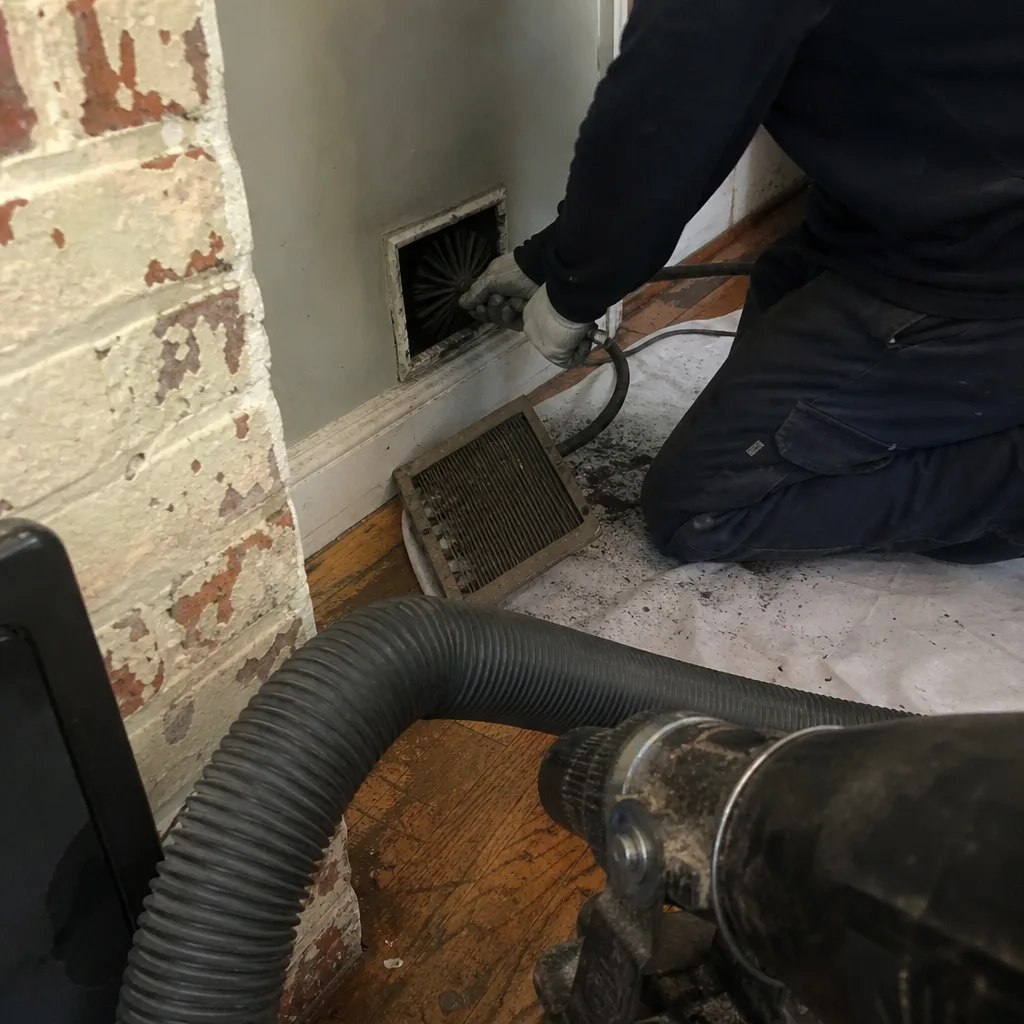 Before
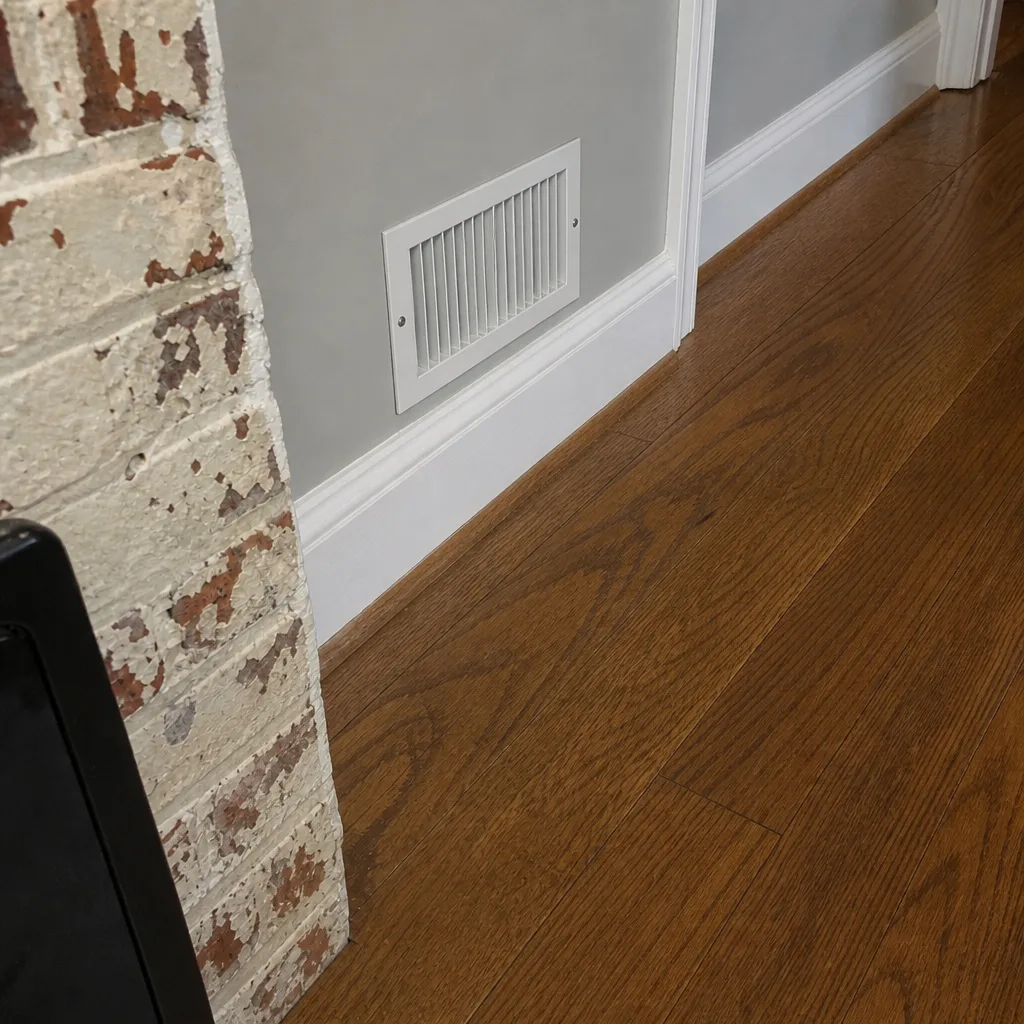 After
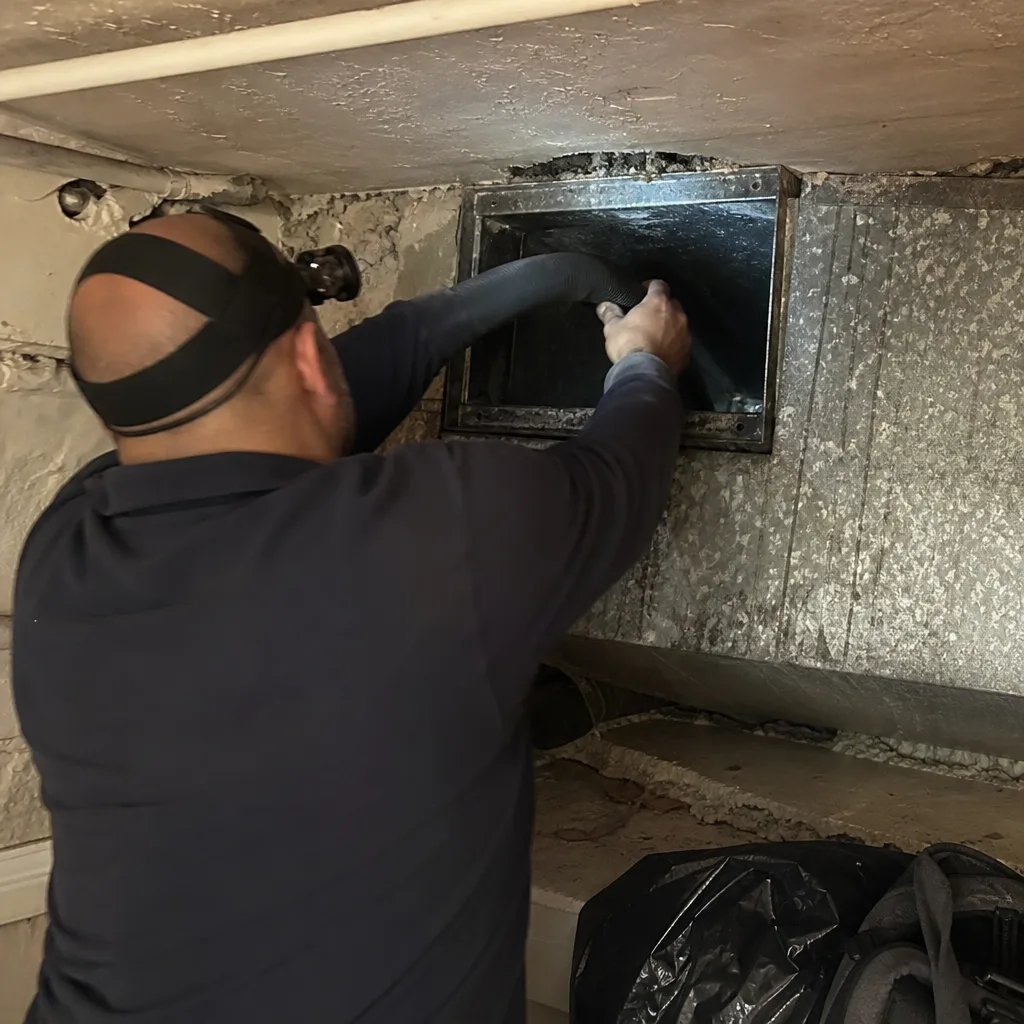 Before
 After
 Before
 After
When to Call a Professional
Call a professional if any of the following apply: a water intrusion event has touched the apartment, ductwork, or the unit above; there’s been a fire or smoke event anywhere in the building; a renovation is underway or recently finished and the system ran during demolition; there’s a musty smell, visible staining at grilles, or a filter that stays wet; or a building board or management company is asking for documentation of the duct condition. Also call if you’re a landlord or property manager and an event has affected more than one unit, because the scope decision needs a written assessment before anyone starts work.
Air Duct Cleaning Greenwich Village offers free estimates in Greenwich Village – call (855) 337-2008. We answer 24/7. Fast dispatch from 7am to 7pm, Sunday through Friday. The price is set per job by the written estimate, so you’ll know the scope before work starts. Our technicians have up to 9 years of experience, and the local professional is licensed and insured as their state requires.
Frequently Asked Questions
Most post-emergency duct cleaning in Greenwich Village runs by the job rather than by the vent, because the scope depends on the contamination type and the size of the system. A water event that saturated the liner is a larger job than a routine cleaning, and a fire event that requires negative-air containment is larger again. The written estimate sets the final price, and we give you that in writing before work starts. Call (855) 337-2008 for an exact quote – estimates are free.
Cheap quotes are usually per-vent prices that don’t include containment, sanitizing, or the air handler, and they often leave the sealing step out entirely. On an emergency job, that missing containment is the difference between cleaning and spreading. A quote that doesn’t name the equipment or describe the containment protocol is a quote for a different, smaller job. Ask what’s included, then compare. Call (855) 337-2008 to walk through a scope.
Water and soot often reach the duct system without visible damage in the apartment. The tell is usually smell (musty or smoky), a filter that’s wet or clumping, or a system that’s running but feels different. If a water event or fire happened in the building, treat the duct system as potentially affected until an inspection says otherwise. A free estimate can put that question to rest. Call (855) 337-2008.
Yes. Duct repair and sealing is part of the same visit as the cleaning, so you don’t need to bring in a second company to address what the inspection turned up. That matters in Greenwich Village pre-war buildings, where unsealed chases are common and where a single gap can let the next renovation’s dust straight into your system.
For a healthy system with no emergency event, most homes go several years between cleanings, and the frequency depends on pets, allergies, filter maintenance, and whether there’s been renovation or water intrusion. After an emergency event, the timing isn’t about routine at all; it’s about assessment and cleaning within days. If it’s been a while and you’re unsure, an estimate is the way to find out. Call (855) 337-2008.
Ask for before-and-after photos of your own grilles and duct runs, taken at the same framing so the comparison is honest. A written record of what was cleaned, what was sealed, and what equipment was used is the rest of the answer. That documentation also supports an insurance claim. Call (855) 337-2008 to ask what the report will include.
Yes. Dryer vent cleaning is on our service menu and it’s a documented fire hazard when lint builds up, so it belongs in a post-event review of a building’s ventilation. Most duct-only cleaners decline it. If a fire or renovation event has raised questions about the dryer vent, mention it when you call.
The Bottom Line
Duct emergencies in Greenwich Village come from three events: water, fire and smoke, and major renovation. In each case, the first moves are the same: stop the source, shut the HVAC system off, and get a written assessment before any cleaning starts. What differs is the protocol after that. Water needs a saturation check and fast care. Soot needs HEPA-rated collection and negative-air containment before anything is agitated. Construction dust needs to be removed from the coil and blower, not just the ducts, plus sealing where the dust got in. Document everything with photos and a written assessment; that’s what makes insurance work and what proves the job was done. Call (855) 337-2008 for a free estimate. We answer 24/7. Fast dispatch from 7am to 7pm, Sunday through Friday. One flat price per system, agreed before work starts.
Written by the team at Air Duct Cleaning Greenwich Village.